Showing posts with label A* Blogger Brett C. Show all posts

Sunday, February 5, 2012

How to Survive Your “9 to 5” and Beyond.....

Something, Somewhere Went Terribly Wrong
The Perils of Modern Living

Chances are you are reading this while sitting in some sort of chair. You, like most of the modern day population spend their day in a chair. Our jobs and careers require us to sit most of the day in front of computer screens and the daily demands of our life often keeps us from any kind of beneficial physical movement. But we are not designed to be in chairs. We are designed to move. To squat, bend, push, pull, lunge, twist, walk and run. Yet from the age of six on we are confined to this man-made prison.

When you spend much of your day sitting, whether it be in front of a computer, behind the wheel of a car, or in front of the television-bad things begin to happen to the body.

Pay Attention to Your Posture


With so much time spent in front of computers and TV’s, we develop poor posture. We have a tendency to slump forward, our shoulder blades sliding forward and up, our heads protruding in front of us. If you spend much of your day in front of a computer, you’re probably slumping over, even if you’re not aware of it.

Without perfect posture, you significantly increase the potential for pain and injury in a chain that starts with your neck and shoulders, descends to your lower back, and all the way to your knees and ankles.

Get Your ZZZZ’s


A productive day at work begins the night before by getting enough sleep. You parents had a bedtime for you when you were in school for a reason.... so you woke up rested and refreshed the next day, thus affording you the best opportunity to learn in school.. Well, the job at the office isn’t much different. So, the same principle of how to keep alert and healthy apply.

Most of us are walking around sleep-deprived. How much sleep do we need? Well, individual needs vary, but most would agree that we should be getting between 7 - 9 hours per night.

Caffeine Cut-Off

When you wake up tired, with all that awaits you, most people combat that fatigue by looking for energy elsewhere. It’s often looked for in sugar and caffeine, which supply the body with “quick” energy. Since caffeine has a half-life of about 6 hours, if you have a coffee at 3 p.m., you can still have as much as 150 milligrams of caffeine in your blood stream at 9 p.m. So steer clear of caffeine late in the day so you won’t disrupt your sleep cycles.

Begin Your Day with Breakfast..

Our diet plays a fundamental role in our mental, emotional and physical well being. As kids we are encouraged to eat breakfast to perform at our best. As adults we need breakfast to sustain us as well. When we skip breakfast, we can end up going for as long as eighteen hours without food, and this period of semi-starvation creates physical and intellectual energy lulls.

Starting your day off with a coffee and a pop-tart only sets you up for failure. Eating a full breakfast will provide you with both staying power and energy to help you maintain productivity throughout the day.


Give Yourself A Break

When we were in school we called it recess. A pause from doing something (as in work); a break. Nowadays people get to work and strap themselves into their work stations as if they’re about to go on a Space Shuttle journey. They never get up, they don’t go outside, they eat lunch at their desk while working. Your body needs to move! So take some self-time to get up, stretch and relax. It will help you to stay calm, focused and energized during the day.

Hydrate


To put it simply, to be healthy you need to be hydrated. Water = Life. Water not only serves to hydrate the body’s tissues and cleanse the body of unwanted chemicals, it is also an essential component of your body’s chemical reactions. Research has show that as little as 2% dehydration significantly impairs cognitive function. Water also makes up 85% of the intervertebral discs in your spine, so proper hydration is a preventive measure against low back pain and other chronic joint pathologies. To stay healthy it’s essential to drink half your body weight in ounces of quality, chlorine-free water daily. This will give your body energy and help to keep it functioning optimally.

-Brett Cohen
Fitness and Wellness Coach, Fitness Presenter and Educator
http://www.integratedtrainingsystems.com/
imakeufit@gmail.com
(917) 596-8485

Read more...

Friday, January 13, 2012

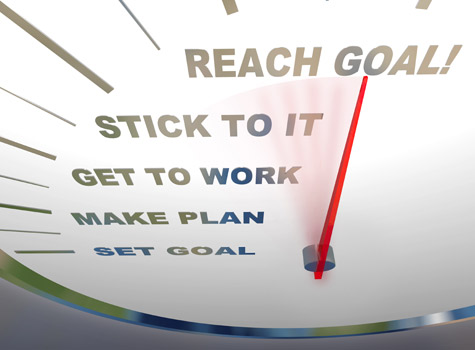
Resolutions vs. Goals

New Year’s Resolutions
The New Year is here! As one year bows out and a new one comes in, we’re prompted to reflect on our lives and about what we would like to achieve or change in the New Year. I often hear the phrase: “New Year, New You”.... but sadly, the vast majority of people fail to capitalize on this reflective phase of their life, and the wishes of a New Year’s resolution inevitably falls back to normal routines and all remains the same... “New Year, Same You."
Why do so many people that “re solve” to make changes in their life fail? We start with good intentions but it takes more than good intentions to achieve sustained change.
Resolution
This is the time of year when many people begin to “resolve” to: “be more healthy,” “lose weight,”  or “eat better.” However these statements are abstract, unmeasurable, and undefinable. The definition of resolution is; a formal expression of will, or intent. Forget resolutions! They don’t work, they lack accountability. Resolutions do not have a strategy or a plan. Instead work on setting goals.

Goals

Goals, on the other hand, are clear, measurable and time bounded. Goals are the result of achievement toward which effort is directed. Goals provide you with a roadmap to go from wherever you are to wherever you want to be. Here are some tips to help you reach your goals.


A goal is most powerful when written with the following attributes:

•   Specific: “I will to lose 30 pounds in the next 3 months” rather than “I want to lose weight.” Or, “I will drink 1/2 my body weight in ounces of water every day” rather than “I want to be healthier.”

•   Measurable: You can cross it off a list. If you set a goal of exercising 3 days per week and schedule it in your calendar you an easily see if you’ve reached your weekly goal.

•   Affirmative: They should be affirmed with positive statements like: “I exercise 2 times per week” vs. “I want to exercise more often.”

•   Realistic: Your goal must be realistic. If it’s not, you are setting yourself up for failure. If you aren’t exercising at all and you say you’ll get to the gym 4 days/week, that is not realistic and as soon as you begin to fall behind you will get discouraged and likely quit altogether.

•   Time Sensitive: By when? Always state the date that you intend to complete your goal. If no deadline exists there isn’t much incentive to achieve them.

If you’ve had challenges making changes in the past and you are serious about your health and fitness, you may consider the services of a coach to help you help you establish goals and reach your goals.


A coach's job is to:

1.    Assess exactly where you are now.
2.    Clarify where you truly want to go.
3.    Identify obstacles and how to overcome them.
4.    Provide a framework that allows you to build a bridge between them that becomes the roadmap to your success.
5.    Document progress and accomplishments.
6.    Encourage you to stay the course.
7.    Help you get incr edible results!

-Brett Cohen, Sports Performance Coach, Holistic Lifestyle Coach, Fitness Presenter and Educator, and Founder of Integrated Training Systems. (917)596-8485

Read more...

Friday, November 11, 2011

My Marathon is Over, Now What? -- Keys to a Fantastic Off-Season

Chicago, Atlantic City, Marine Core, ING Hartford, Philadelphia, and the Granddaddy of them all, the ING New York City Marathon... Some of the more popular fall marathon events in the northeast.
If youʼve run and completed one of these races, congratulations! Having run seven marathons myself, and considering signing up for my eighth, I understand how much preparation goes into an event of this magnitude.
Some of you may you have trained all year for this marathon, or at the very least, the last four months.You shared your glory with your friends and family after the race....you walked around the next day or two with your marathon medal around your neck...you spent the next
two or three weeks talking about how you could have run faster if you had only.........But after about three weeks of that, itʼs time to move on.. NOW WHAT?


Recovery And Regeneration

Some of you will rest and recover, while others will sign up for another marathon, tri-athalon, or similar endurance event before the sweat dries. While setting a new goal for yourself is commendable, continually exposing your body to stresses of endurance training without the proper amount of recovery, may simply result in being disappointed with your performance results and bringing your body one step closer to orthopedic injury.

Running marathons is very stressful on the human body. Undoubtedly, it involves a deeper level of muscle and joint tissue healing and a more complete resetting of the endocrine and immune systems than that which occurs during your normal race and training cycle. Aside from just putting a strain on all of the muscles in your legs, arms and torso, marathons can also affect your lungs and many of your other internal organs.

An Austrian study found that blood levels of antioxidant enzymes remained significantly reduced, while biomarkers of muscle damage and inflammation remained significantly elevated, in triathletes nearly three weeks after they had crossed an Ironman finish line. I would imagine that such abnormalities could be found in runners for at least a couple of weeks after they complete a high-workload training cycle culminating in a peak event such as a marathon. Because of this, it's important that you take some time off from running after completing a marathon. Marathon runners and marathon coaches often suggested different time frames that you should use when resting after a marathon before running again or running another marathon. The most common recommendation for resting after a marathon and running again is 2 to 4 weeks, before running another marathon, 16 to 20 weeks.

Bill Rodgers
Professional Advice

On April 13, 2008, Ryan Hall finished 5th in the London Marathon with a time of 2:06:17-the fastest marathon time ever recorded by an American- born runner. Just 14 weeks later Hall ran the Beijing Olympic Marathon, finishing a disappointing 10th.Top-10 in the Olympic Marathon is nothing to be ashamed of, but Hall knew he could have done better.

After the Games, Hall confessed that his pre-Olympic training had gone poorly. He just couldn’t match the times he was accustomed to posting in key workouts, and the more he fell short the more he tried to force his training, and the more he forced it the worse he felt. In the immediate aftermath of Beijing, Hall wasn’t sure exactly why he had not been his usual self in the summer of 2008, but eventually he figured it out. “Looking back on it,” he said in a recent interview on runnersworld.com, “I think I never let my body totally recover from London so I never made the physical gains that I needed to.”

Many years ago, when asked how long one should wait after running a marathon before running another one, the great Bill Rodgers said, “Until you’ve forgotten it.” Ryan Hall probably defied this wisdom!


Training Cycles

For many runners, training cycles are year round. No change from month to month, season to season. But proper training for sport involve training cycles, with intense strength training and conditioning programs that lead into the seasonʼs schedule or event training program.

A runner can no more expect to train progressively year-round than a cornfield can expect to produce corn spring, summer, fall and winter. The body needs time to heal. Most professional and high-level competitive runners rest two to four weeks after completing a training cycle. The average should not be doing trying to emulate the professional runners training cycle.. A high-level runner has a team looking after them; a coach, trainer, massage therapist, physiotherapist, nutritionist, etc. They run, eat and sleep.. That’s it! The average runner is trying to cram in their miles within the confines of their forty to sixty hour workweek along with everyday responsibilities without the benefit of a team.


Create an Off-Season

With fall marathon season ending in November and with two to four weeks rest post race, the winter holiday season right on it’s heels....an ideal off- season for a runner should begin in January of the new year. The off- season allows the runner to: rest and recover from months of intense training, recovery from injury, and implement an off-season strength training and running training strategy. The off-season lasts 16 weeks. The same amount of time it takes to prepare for a marathon. This is the time it takes to establish a fitness foundation that will stand up to the demands of being an endurance athlete and allow the athlete to reduce the rate and risk of overuse injuries that plague endurance athletes as well as lead to improved performance.

Rather than using the spring race schedule to “get in shape”, runners should “be in shape” and simply use races to sharpen their times.
Getting Started 

Letʼs break it down...We have 4 phases-each phase is a 4 week program periodized progressively and subdivided by workout days... then we start programming exercises. For those of you who followed a marathon training program.... the same principles apply. 
Phase 1 (Intro phase-establish joint mobility, muscle flexibility, static and dynamic stability, improve posture.)
Phase 2 (Base conditioning phase-master movement patterns with specific exercises that emphasize your weaknesses.)
Phase 3 (Strength training phase-introduce load to movement patterns to improve neuromuscular recruitment.)
Phase 4 (Shock phase-add plyometric training to improve muscle elasticity and tissue tolerance.)

This cyclical approach to training that is progressive in nature results in peak levels of performance. But, before we begin our four phase conditioning program we must identify your weaknesses in order to make them stronger.

Know Before You Go

I have read many running related articles that discuss how to avoid common running related injuries. Few ever mention getting screened or assessed to see what your injury risk potential is! An assessment goes a long way in preventing training injuries in that it identifies the weak link in the athlete and allows the coach/trainer to target that weak link prior to the beginning of the training season.

Assessing injury risk is the first step to reducing that risk!! Itʼs far easier to prevent an injury than to treat an injury. The best way to prevent injury is by taking a pro-active approach. Injuries arise in runners because most simply try to add fitness or performance to a body out of balance or a body that is already injured and experiencing pain.

Strength Training for Runners

As runners STRENGTH TRAINING is something I think most runners feel that they “should” be doing, but as runners and endurance athletes we donʼt really know how to incorporated it into our training to make it beneficial to us. Thatʼs where the introduction of an off-season comes in.

Clara Grandt

The benefits of strength training are numerous, strength training: increases strength of connective tissue (muscles, tendons, ligaments), increases bone density, improves resistance to muscular fatigue, maintains lean mass that gets catabolized in racing season, increases muscle POWER, improves running economy, reduces the rate and risk of training related injuries.

“Before each training cycle, I add one thing to focus on that will benefit my running, like doing strength training. This helps me to improve without risking injury by making drastic changes”. --Clara Grandt - 2011 Boston Marathon in 2:29:52 at age 24!

Strength training will help you: increase speed, resist fatigue, prevent injury, and maximize your athletic potential!

Why Runners Avoid Strength Training

So, with all these obvious benefits, why arenʼt more runners incorporating strength training into their programs? A recent on-line survey of runners revealed the following statistics.

What Strength Training do You do Regularly?
  • Upper Body      27%
  • Core and Legs   9%
  • Entire Body      27% 
  • None                36%
There is a lot of controversy over the type of strength training an endurance athlete should be doing, when you do it, or whether they should be doing it at all. One reason runners avoid strength training is that they still figure that the way to get into better running shape is through more running. Although this seems logical, itʼs the very reason most road runners end up injured and rarely reach their running potential. Another reason runners avoid strength training is not enough time to do it. Itʼs hard enough to try to get in all the running you need to do, how can you fit in strength training into the mix? We tend to think of our training in terms of how many miles we can pack into our busy week, but yet doing the same thing season after season, and expecting different results is by definition, insanity! Lastly, lack of knowledge..they just donʼt know how.


Brett’s Bottom Line:

“Running pain and running injuries are not an inevitable part of training.” If you plan your off-season as well as you planned your racing season allowing your mind and body sufficient rest and recovery, get screened and implement a functional strength training program-endurance runners can improve their bodies and run injury free, spending more time on the roads and less time in rehab.

Brett Cohen is a Sports Performance Coach, Nutrition and Lifestyle Coach, Educator and Runner as well as creator of: “Ready to Run”, a comprehensive conditioning program specifically designed for runners and endurance athletes.
imakeufit@gmail.com
www.integratedtrainingsystems.com

Read more...

Friday, August 26, 2011

Recovery & Regeneration: A Runner’s Secret Weapon


Recovery and Regeneration: A Runner’s Secret Weapon-By Brett Cohen


Fall in the Northeast is the time for half and whole marathons: The Philadelphia Rock ‘n’ Roll Half Marathon on September 18th, Hamptons Half on September 24th, Grete’s Great Gallop on October 1, Chicago Marathon on October 9th, and the grandaddy of them all-The ING New York City Marathon on November 6th, 2011.

A typical training program for events like these can be 12-16 weeks in length and while all training programs advise you how often to run (frequency), how far to run (distance), and how fast to run (pace), most do not tell you what you should be doing when you’re not running in order to recover from your hard training.  In other words, what you should be doing to accelerate the repair of your muscles and other soft tissues from all that running!


The Mighty Marathon


The modern marathon is a phenomenon even beyond the wildest dreams of the father of the modern marathon, Fred Lebow, founder of the New York City Marathon. The NYC Marathon began in 1970 with 55 finishers. The 2010 version of the same race had 45,103 finishers!

The Running USA organization estimated that a total of 507,000 runners finished a marathon in 2010 compared to 173,000 in 1980. If only the economy could grow at that pace!


The Injured Runner


While these numbers are great news for running shoe and clothing companies and the municipalities that sponsor them, they have also become a major source of income for orthopedic surgeons and physical therapist trying to bandage up those who venture to participate is these types of endurance events without being truly “Ready to Run”.

A Runner’s World.com poll revealed that 66% runner’s suffered from training related injures. Research has shown that 6 out of every 10 females that begin a distance training program will eventually become injured! Those are high percentages! I wish I had those odds at the casinos -- I would take up gambling....

Christopher McDougall, author of Born to Run, said in a podcast, “Talk to a runner, I guarantee that within 30 seconds the conversation will turns to injury.”

So why are so many runners getting injured? First, most begin a training program without having the physical pre-requisites needed to run safely, second, they have muscles imbalances that can lead to injury due to the repetitive nature of endurance sports and third: most are unaware of the importance of recovery & regeneration. The things they can and should be doing on the days they are not running that helps the body rebound from all the training they do.

Recovery & Regeneration

So what is recovery and regeneration anyway? Well, basically it’s the repair of muscles and other soft tissue from training.

As runners we tend to measure how effectively we’ve trained by how sore we are a day or two after a race or hard workout. But what runner’s often don’t realize is that their body improves and adapts to the stress of those workouts only with sufficient rest and recovery. Without sufficient rest and recovery your body will not reap the benefits of all your hard training.

Typically runners will do one of two things after a race or workout: 1) either  put themselves through another workout, or 2) nothing at all. So in order to recovery effectively we must first change our mindset (a set of beliefs or way of thinking that determines one’s behavior, outlook and mental attitude).

When you want to recover from the stresses of life and work you go on vacation -- a time to get away, to rejuvenate, regenerate. This takes planning. “When will you go, where will you go, how long will you go for?”

Think of the recovery & regeneration process the same way. Recovery & Regeneration is what you are doing when you’re not running and it takes planning.

Who Needs Sleep?

In a song title “Who Needs Sleep?” made famous by the musical group The Barenaked Ladies, the answer is: YOU DO!

Most of us are walking around sleep deprived as it is, but sufficient sleep is even more essential for those training for endurance events. Intense training and lack of sleep don’t make good training partners. Sleep is the most important factor in the recovery process. It’s when you’re sleeping that your body works to repair muscle stress that had occurred during exercise.

How much do we need? Well, individual needs vary but most would agree that intense training requires between 7 - 9 hours per night. Deena Kastor, American long-distanc e runner holding records in half and marathon distances gets as much as 12 hour/night during training.

But it’s not just how much sleep but when you sleep that’s important. Our physiology is still the same as our ancient ancestors that lived by the natural rhythms of the sun, moon and seasons. But today we have artificial light available to us 24/7. Light stimulates the release of cortisol, an awakening hormone, that can disrupt our ability to fall asleep on time. The body does its physical repair from 10 p.m. to 2 a.m. so the later you go to sleep the less time your body has for tissue repair which eventually will lead to decreased performance, tissue breakdown, and injury!


Self-Myofascial Release


Aside from sufficient sleep the next most important thing a runner can do to facilitate the recovery of muscles and other soft tissue is self-myofascial release. SMR is self-directed massage of the bodies soft tissues (myo = muscle) and fascia.

Fascia is comprised of mostly water and two kinds of protein, collagen and elastin. Fascial tissue permeates the entire body and envelops all the structures of the body. It is the unifying factor of the body’s movement system, which means that practically speaking muscle and fascia are one.

 According to fascial expert Thomas Myers,“muscles are the engine of movement, fascia is the medium of movement.” Fascia is what transfers force throughout the body. So when we are training our muscles we are training our fascia as well.

Fascia accumulates tension from overuse which ultimately leads to decreased flexibility and mobility in the body. The accumulated tension of exercise creates what manual therapists:(Massage therapists, Active-Release therapists and Rolfers) refer to as “adhesions,” “knots,” or “trigger points”.  But most of us don’t have manual therapists available to us on a whim so we must rely on SMR both before and after exercise to treat this most important tissue.

SMR release is a great barometer of the quality of your muscles and connective tissue. The more uncomfortable the process of rolling is, the more that tissue needs to be kneaded.

Summary

Recovery is the limiting factor in performance, especially for endurance athletes. In order to survive the training (not just the event), runners need to become more aware of what they can and should be doing on non-training days. Regeneration is a then a recognition that we need to plan ways to recover, mentally and physically. Recovery can be passive; in that we exert no effort, e.g. sleep or active; meaning we are participants in the process, e.g. self-myofascial release. As athletes we need to be aware that when train our muscles we are also training our fascia. So we must become more conscious about how to keep it healthy and resilient. The soft tissues of the body must be worked regularly to maintain healthy, pain-free movement. Regeneration through tissue manipulation is crucial for the body to experience the gains made through training.

Brett’s Bottom Line:

The better and more rapidly you recover, the more quickly your body adapts to the stress of exercise and the sooner you can do another quality workout.

About the Author

Brett Cohen is a sports perfo rmance coach, author, lecturer, seven time marathoner and creator of “Ready to Run”, a comprehensive conditioning program specifically designed for runners and endurance athletes.


(917) 596-8485/imakeufit@hotmail.com

Read more...

Tuesday, July 5, 2011

Driving You Forward

Scott C

Brett C


Running is one of the greatest types of exercise available to most of us. It has one of the lowest equipment needs of any sport. You really only need a pair of running shoes, a t-shirt and a pair of shorts.


Right?

What is running anyway?

You could simply define running as the act of putting one foot in front of the other.... But as runners do you know how this happens biomechanically? What muscles get you from step to step, from point A to point B?

From the Starting Line to the Finish Line

What drives you forward are your hips. The hips are quite complex and it would take much more detail than this blog entry allows to go over all the muscles and mechanisms that contribute to proper hip function. So, this article will be limited to the function of the gluteus (hip extensors) and hip flexors.

We are, by-in-large, a sedentary population. Now matter how many miles you run in a week, the majority of people reading this sit between 40-60 hours a week. When you spend much of your day in front of a computer, behind the wheel of a car, or in front of the television set bad things can happen that can be detrimental to a runner’s performance. One such problem is the loss of hip mobility. Hip mobility can be restricted by both soft tissue and muscle length and strength discrepancies. The key to hip mobility is to get the right muscles moving in the hip joint and decrease the movement of the lumbar spine as a substitute for hip movement.

If The Hips Don't Move, The Spine Will

Being in a seated position tends to lengthen the gluteus and surrounding hip stabilizers and shortens the muscles on the front side, the hip flexors. The hip flexors create a paradox in that they need to be flexible enough to allow for full range of motion of the hip extensors and also be strong enough to create full hip flexion. In other words, the ability to lift your knee up to hip height so as to create space for the leg to move forward in the swing phase of our running gait. Additionally, if a runner has an inability to flex the hip this will usually result in flexion of the lumbar spine (the low back). Done repetitively, this can lead to Low Back Pain!

The problem arises when chronic quad/hip flexor tightness “inhibits” (down regulates) your gluteus (the body’s main hip extensor). When your gluteus are not working properly it forces your hamstrings to take on the job which can lead to hamstring strains/pulls, Achilles tendonitis, plantar fasciitis, patella femoral tracking disorder, and lower back injuries that often results in a decrease of neural input to the hip extensor muscles and hip flexor muscles.

There are 5 hip flexors…. .Rectus Femoris. TFL. Sartorious. Iliacus. Psoas. The TFL, RF, Iliacus, Sartorius all insert at the level of the iliac crest. They do great up to the level of the hip. The psoas acts directly on the spine. So, in the case of an under-active psoas, the femur may move above the level of the hip but it is not from the action of the psoas, but rather the momentum created by the other four hip flexors. This is what commonly causes Hip Flexor Strains and Quad Pulls under hard training loads. That's what makes the following movements so effective in that it eliminates the momentum of the other four flexors.

When you think of loosening a muscle stretching automatically comes to mind. However, you can also loosen your hip flexors through certain exercises. It works by taking your muscles through their range of motion dynamically.

Here are some ways you can strengthen both your hip flexors and hip extensors using nothing but your own bodyweight.

90/90 Side Lying Hip Flexor Stretch

On your side with both knees pulled to chest, holding the top ankle with the top hand and the bottom knee with the bottom hand

Contract the top gluteus while pulling the top leg back until stretch is felt

Hold two seconds, return to start position and repeat for prescribed number of repetitions

Switch legs and repeat

For a demonstration, click here. 

The Quadruped Hip Extension

• Start in a quadruped position (on your hands and knees).

• Tighten your core and contract your abs to stabilize the spine.

• Focus on contracting the left gluteus. You may need to place your hand on your gluteus to be sure it contracts.

• Slowly lift the left leg up while keeping a 90-degree bend at the knee.

• The left thigh should be nearly parallel with the ground.

• Slowly lower to the start position and repeat 10 reps per side.

• To increase the intensity of this exercise, place and grip a small 3-5 pound dumbbell behind your knee or add an ankle weight.

For a demonstration, click here.

Supine Single Leg Bridge

A single leg supine exercise that strengthens pelvic stability, gluteus muscles, ankles and especially the hamstrings is the single leg bridge. Start by laying flat on your back and raise your hips off the floor. Then lift your left foot a few inches off the floor and straighten your left leg. With your leg extended, move your hips up and down for 10 seconds. Lower your left foot and repeat the exercise on the right leg.

Do five repetitions on each side.

For a demonstration, click here. 

Overhead Split Squat

This is a variation on the basic lunge and is good movement for opening up your hip flexors.

• Hold a weight plate (or barbell) overhead, with your feet shoulder width apart and knees slightly bent. Without using any weights another option is to keep hands at sides and extend your arms up as your hips travel down.

• Keep the weight directly overhead (in line with the shoulder joint), and take a comfortable step forward in to a deep lunge position.

• Make sure your forward knee remains over your forward foot (not in front of it).

• Forcefully drive your forward heel in to the ground and return to the starting position.

• Perform up to 10 repetitions on each side and then switch sides.

• Maintain perfect posture throughout the movement — your head is level, your eyes are looking forward, your chest is held high and your back is flat.

• Don't bend your elbows or let the weight sink during the movement.

• Don't let your front heel lift off of the ground.

For a demonstration, click here. 

Backward Lunges

Here is how to do a backward lunge, step by step:

1. To begin, your feet should be shoulder width apart, torso erect with arms hanging straight at your sides, palms facing in.

2. Take a slow, controlled lunge (or large step) backwards with your left foot.

3. Lower your hips so that your right thigh (front leg) becomes parallel to the floor. At this point your right knee should be positioned directly over your ankle and your right foot should be pointing straight ahead.

4. Your left knee should be bent at a 90-degree angle and pointing toward the floor. Your left heel should be lifted.

5. After reaching the bottom of the movement (when your left knee is almost touching the floor), pause for a moment, or a breath, then push with your left, or back foot to move almost straighten both legs (photo on the left). Keep both feet on the ground - you are not returning to the starting position, just raising your pelvis up a bit and almost straightening your knees.

6. This completes one, now bend your knees and lower your pelvis down to complete another.

7. Return to the starting position (standing with both feet underneath your pelvis); now repeat the movement on the other side, stepping back with the right foot. Do ten up and downs (or reps) on this side now too.

Try and work with two sets of 8-10 repetitions for both the overhead and reverse lunge.

Keep your torso as upright as possible during any Lunge exercise to minimize the stress on the back. Start slow and don't go too low if you are new to the reverse lunge. As you progress you will be able to lunge deeper and to work your gluteus more. Press the heel of your front foot into the ground to feel the gluteus activate and engage.

Move slowly down and up, this will allow you to work your muscles more without jarring your knees.

To make the backward lunge a little more challenging, try adding a torso twist or hold dumbbells at your sides while you lunge. To help maintain balance, look straight ahead instead of down at your legs.

For a demonstration, click here. 

Step Ups

Step ups also help strengthen the hip flexors by placing the load put upon you in a more upright position. The key for getting the most out of your step ups is to use a step height that places your leg close to a 90 degree position when you lift your leg up. The higher you step the more you use your hip flexors. The key is not to step so high that you loose your form when you step up. If you have to lean forward on your step up then your step is probably too high. Do 8-10 repetitions. Alternate or work with each step up separately and for an added challenge introduce light weights, body bars for balance.

For a demonstration, click here.

Conclusion

What you do throughout the day has a huge impact on your ability to move effectively in sports. It takes much more than changing shoes to become a better runner. You need strong, balanced muscles that Drive You Forward.

Our job as strength/performance coaches is to get you to understand what muscles aren’t functioning properly, identify what muscles need to be used/strengthened and then teaching you how to use them properly.

About the authors:

Brett Cohen is a sports performance coach, endurance athlete and founder of Ready To Run and Intergrated Solutions comprehensive conditioning program specifically designed for runners and endurance athletes.

www.integratedtrainingsystems.com/
imakeufit@hotmail.com (917) 596-8485

Scott Cohen is a long time member of the New York Flyers, a former club VP and President, a certified coach for running and multi sport performance, an endurance athlete and the founder of The Athlete Within

www.theathletewithin.com/
3trikid3@gmail.com (917) 439-1195

Read more...

  © Blogger templates The Professional Template by Ourblogtemplates.com 2008

Back to TOP