Showing posts with label Weather. Show all posts

Friday, February 11, 2022

Wonders of Wool

Melissa S
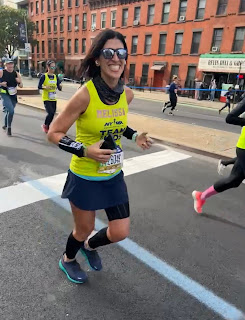
As someone who is miserable when it comes to cold temperatures (my definition is anything below 70 degrees), I’ll let you in on a secret that has allowed me to enjoy running in sub-freezing temps: Merino wool. Perhaps this is old news to you veteran runners and I’m just late to the party..er..race, but I only had to wear this magical fabric once during a blustery run to know I’d never return to synthetic athletic wear during these frosty, frigid New York months.

The idea of wool might conjure up images of itchy sweaters and thick, uncomfortable socks. Or maybe you picture fluffy sheep and grandma’s knitting. For me, the thought elicits memories of my curly hair … before I discovered keratin! 


Regardless, wool can provide warm and comfortable thin base layers, mid-layers, outerwear, and socks. But not just any wool—Merino wool, straight from the Merino sheep.  Ditch the itch! Not only is the fiber on Merino sheep very fine, it is also quite soft, more so than any other wool from any other breed of sheep. 

As a cold-weather convert, here are my top reasons to give Merino a try … especially if you, too, are a cold-averse runner. 

  • You will feel dry. 

    Who wants to be freezing and wet? Merino wool wicks moisture and makes a great base layer. Your wool top will not stick to your body; nor will you feel gross and clammy when you start to sweat. Plus, in the event you get stuck in a torrential rainstorm or if you happen to be a profuse sweater, Merino wool dries quickly.

  • You won’t smell. 

    Your friends, teammates, and even fellow subway car passengers will thank you! Unlike some other fabrics, Merino wool doesn’t hold odor. This is due to the fabric’s ability to absorb sweat quickly, which allows the dampness to evaporate.  


  • You will feel warm. 

    Merino wool absorbs and releases moisture as needed, so that when you wear clothing made of Merino wool, its natural properties let you feel warm in the cold (and, conversely, cool when it’s hot).  

  • Good for environment, sun protection, and stopping static. 

    Merino wool is more sustainable, making it better for the environment than many other fabrics; it provides SPF protection; and it is static-resistant.  


  • It’s durable.

    You may wonder if it’s worth the price tag. There’s always a catch, isn’t there? The one downside to Merino is the upfront cost, but luckily, you get what you pay for. 


    I’ve purchased Merino wool pieces that have lasted more than a decade of winter running and they still look brand new. That’s a pretty compelling return on investment. My personal favorite brands are Ibex and Smartwool, both of which often run good sales.  (Disclosure: I do not work for either company.)  



Personally, embracing gear made from Merino wool has transformed me from winter-phobic to one who truly enjoys a cold-weather run. Remember, when it comes to running conditions, there’s no such thing as bad weather; you just need the right apparel to keep you on track. 😊


-Melissa S.


Read more...

Thursday, July 12, 2018

SUN PROTECTION FOR RUNNERS

Jane Y.

It’s almost SUMMER!  You know what that means.  It’s time to think about gearing up for fall marathon training.  Chicago.  NYC.  Berlin.  Marine Corps.  So, lace up your sneakers and hit the pavement.  However, please don’t forget your sunscreen.  One in five Americans will develop skin cancer in their lifetime—don’t let it be you!

Who should wear Sunscreen?
EVERYONE! Anyone can get skin cancer, regardless of age, race or gender. 

When should I wear Sunscreen?
EVERY DAY.  Believe it or not, the sun emits harmful UV rays year-round.  Even on cloudy days, up to 80% of the sun’s UV rays can penetrate your skin. 

How to Choose a Sunscreen:
  • Broad Spectrum: Meaning that it should protect the skin from ultraviolet A (UVA) and ultraviolet B (UVB) rays, both of which contribute towards skin cancer
  • SPF 30 or Higher:  The sun protection factor is a measure of a sunscreen’s ability to prevent UVB rays from damaging the skin. 
  • Water Resistant: How long the sunscreen will stay on wet skin (40 or 80 minutes). Even water resistant sunscreens have to be re-applied as heavy perspiration can reduce their efficacy.  

What Type of Sunscreen is Best?
Available sunscreen options include lotions, creams, gels, ointments, wax sticks and sprays. 

Creams: Best for dry skin and the face
Gels: Good for hairy areas, such as the scalp or male chest
Sticks: Good to use around the eyes
Sprays: Although easier to apply, make sure you spray an adequate amount and rub it in to ensure equal coverage

How much do I need to Use?
One ounce of sunscreen (a full shot glass) is considered the amount needed to cover the exposed areas of the body.  Don’t be that stingy bartender.  Pour yourself a nice tall glass!

WHEN should I Apply it?
Ideally, you should apply sunscreen before you go outdoors.  It takes approximately 15 minutes for your skin to absorb the sunscreen and take effect.  If you wait until you are out in the sun to apply, you could risk getting a sunburn.  Re-apply sunscreen every 2 hours, especially after sweating or swimming. 

WHERE should I Apply it?
On all bare skin—including the face, neck, arms and legs.  Don’t forget your ears and the top of your head, especially if you don’t have much hair there.  To protect your lips, apply a lip balm with a SPF of at least 15. 

What else can I do to PROTECT myself?
  • Seek shade, remembering that the sun’s rays are strongest between 10 am and 2 pm.  If you have a long run, schedule it for early morning or late afternoon. 
  • Wear protective clothing such a long-sleeved shirt, pants, a wide brimmed hat and sunglasses if possible.  
  • Check your skin! If you notice anything changing, itchy or bleeding on your skin, see a dermatologist.  Skin cancer is almost always curable when detected early,

What are some good sunscreens for runners?
Lotions and creams are great until you start running and your eyes start to sting and burn (trust me, I know from plenty of experience). I prefer sticks because they are good for sensitive areas and are ultra portable—small enough to fit in your running belt or pocket. 

  • ELTA MD UV Clear Broad Spectrum SPF 46 (A perennial favorite of all dermatologists and especially mine, because you CAN rub it in your eyes and run!)
  • ISDIN Eryfotona Actinica Broad Spectrum SPF 50+
  • SkinMedica Total Defense and Repair SPF 50+
  • Colorescience Sunforgettable Total Protection Brush on Shield SPF 50
  • Shiseido UV Protective Stick SPF 37
  • Eau Thermale Avene Hydrating Sunscreen Balm SPF 50+
  • La Roche Posay Anthelios XL Senstive Areas Stick SPF 50+
  • Aquaphor Lip Protectant + Sunscreen 
Blogmaster's Note:
Flyer Jane Yoo is a practicing dermatologist with her office location near Columbus Circle.  She attended M.I.T. and Harvard University, with her medical degree at the Medical College of Virginia.  Her clinical and research interests revolve around the prevention, detection, treatment and management of skin cancer.  For more information, you can visit her website at: http://www.janeyoomd.com/

Read more...

Thursday, October 16, 2014

Staying Fit While Staying Home

Kim W

There are lots of reasons why all of us sometimes have difficulty fitting in a run or making it to the gym to work on our strength and conditioning.

Over the years, as a runner, a running coach and a personal trainer I've heard it all (including from myself!) including:


  • The weather's too nasty.
  • A gym membership is too expensive.
  • Traveling for work or pleasure gets in the way.
  • Laziness gets in the way.
  • There are just so many hours in the day.
  • I've got kids and can't leave them home alone.

And this got me thinking. Why don't more of us exercise at home so that we don't have to go out in the nasty weather, pay a gym membership, find a place to run or work-out when traveling, get motivated enough to get dressed and head out the door, or spend a lot of time when we're feeling extra-busy. Well, why don't we work out at home??  

Here are some of the reasons I came up with and/or have heard from my clients:
  • What types of exercises can be done at home.
  • What's the proper technique for these exercises?
  • How do I choose from among all the available exercises to put them together into an exercise program to meet strength and fitness goals?
  • How do I figure out how to vary in-home exercise programs for different durations of time, intensities, and purposes?
  • Etc., etc.
Sooooo, I thought, wouldn't it be great if someone came up with a way for a person to go on-line and have an exercise program provided for them right then and there with a custom-tailored exercise program?  And that's when I decided that this is something that I, Coach Kim, wanted to provide to others. Free of charge, at least initially, plus maybe for a nominal fee for providing some more extensive services. And that's what led to the creation of inMOTION Customized Workouts.

For example, let's say someone wants to do a 30-minute Total Body fitness work-out at medium intensity. Well, then a good work-out for that could include:
  • Butt Kick Jog
  • Later Bent Leg Kick Back
  • Russian Twist with Deep Lean
  • Crab Kick
  • Total Body Crunch
  • Clockwalk
  • Bird Dog Arabesque
  • Etc., etc.
None of the exercises require any equipment, and all can be done in the comfort of home.  The way it works is that a person fills out a short on-line registration form, gets a password, and then can get started right away. All it takes is to select the number of minutes for the work-out and the level of intensity. For those who don't mind paying a small upgrade fee, in addition to Total Body Fitness, other work-out choices include Low Impact, Mid Day Boost, Weight Loss, Beach Body, Running Warm Up and Cool Down, Pre Natal, More Energy and Off My Feet.

You can click HERE  to see a sample exercise (Russian Dance in Place). And then click HERE to see another one (Plank with Leg Lift). These are just two of the graphics from the videos that can be viewed on-line -- in the actual videos each exercise is illustrated and is explained in detail for 30 seconds, and then the exercise is to be performed for 30 seconds before moving onto the next one. You also can hit pause to stop the action and can rewind or skip ahead to the next exercise.

Although the work-outs aren't designed for kids, my daughter loves to join me for my morning routine. She's getting strong!

Getting Strong in Footie Pajamas :)
I'd love for more people to try out the InMotion Workouts for free, and to let me know what you think. If you want to give it a try, just click HERE to create an account. I hope you may find using InMotion a fun and convenient way to work out at home!  And if anyone wants to sign up for the full membership option (i.e., to access more than a dozen other exercise varieties and to save your workouts), you get 50% off the $8/month enhanced membership with this promotion code: FlyersinMOTION.

- Kim Watkins

Blogmaster's Note: I've gotten to know and love Kim Watkins in her role as a Team for Kids Coach. She's founder and CEO of inMOTION Workouts and inSHAPE Fitness. inSHAPE Fitness and inMOTION Workouts aim to get people out of the gym forever, by shedding light on smarter workouts through the best equipment-free tools possible. In business for 15 years, they are a team of trainers working with clients in and around New York City, and in other locations across the US via online meetings. They offer private sessions with clients in their homes or private gyms, and we work with companies across the city with boot camps and yoga in conference rooms, training for recreational events in the parks, and consulting via wellness programs.

With the team's research, highly seasoned training experience, and two amazing programmers, inSHAPE recently launched inMOTION Workouts. This one-of-a-kind exercise platform delivers unlimited customized routines via radio player-like technology. You can read more and set up a free trial account at www.inmotionworkouts.com. To read more about the company, private and corporate wellness programs, visit www.bodybyinshape.com.  -Dave K, Flyers Blogmaster


Read more...

Monday, January 6, 2014

Park To Plunge -- Freezin' for a Reason

Dave K
On New Year's Day 2014, a group of intrepid NY Flyers, Hellgate Road Runners, NR7 Triathletes and friends met up at Prospect Park to participate in and/or watch the annual Polar Bear Plunge at Coney Island.  Organized by Polina Savelieva (Hellgater and NR7 triathlete), the diverse group  met up at Machete Circle at the edge of Prospect Park for a roughly 6-mile run to Coney Island.
The Group Gathers at Prospect Park Eager to Run to Coney Island
Polina had participated in a similar event last year, along with Flyer Pei M.A., who eagerly joined in again. Other Flyers who joined the group were Lizabeth R, Meredith J, Meg B, Doug R and Dave K.  This would be Meg's 12th consecutive New Year's Day plunge!

Lizabeth R, Meredith J, Doug R, Pei M.A, and Meg B
The group followed a simple route to Coney Island Beach, and everyone headed out after leaving warm clothes and other items to be delivered to the beach in one of two cars toting our stuff, thanks to two volunteer drivers recruited by Polina and the use of her own car.

Park to Plunge Running Route
We packed warm and dry clothes to change into after the plunge.  Some plungers use the heated changing facilities and bathrooms near the beach.  Many simply packed a large towel for drying off and to use as a post-plunge "changing room" right there on the beach after exiting the water. Surf boots, water shoes or Vibram FiveFingers shoes were recommended because of the possibility of broken glass on the beach. 


Polina, Our Fearless Leader
Even Dressed the Part in Her Superman Cape
It was highly recommend by experienced plungers that we also bring a warming beverage for after the plunge. For some, that meant hot tea in a thermos or something along those lines. For others, it meant a bottle of something with a bit more of a kick :) And it was suggested that we bring a snack, as well as hand and foot warmers. 

Pei knew from her experience last year what additional items she would bring.  And of top priority was her polar bear hat that she wore proudly before and after the plunge!


Smiley Polar Bear Pei
The morning was cold, but no one complained as we all looked forward to greeting the New Year with an icy plunge.  And so off we went for our run to Coney Island.

Running Alongside Ocean Parkway
Polina S, Dave's friend Kathleen R, Dave K and Pei


When we arrived at the beach, we met up at Ruby's Bar and Grill and then headed to the cars to retrieve our belongings. However, some plungers not with our group seemed less concerned about the cold, or more interested in making a splash with their costumes. 


Before gaining access to the ocean, we had to each receive a wirst band from the Polar Bear Club event organizers after providing them with a liability waiver form. To shorten our waiting time so that we could plunge right away when the event got underway at 1pm, and to support an important charity, many of us donated $20 or more to Camp Sunshine.  This is an organization that supports children with life-threatening illnesses and their families. We created a team, aptly named the Park-to-Plungers, on Crowdrise.com in order to facilitate our donating.

There was quite a crowd on hand to plunge and/or to spectate.  According to the NY Daily News, 2,500 swimmers took a dip in the 41-degree ocean at Coney Island.


And, at last, the moment arrived for us, as in we ran!  

Running In!

Then, out we ran!!

And Running Out!!
It was suggested that we change as quickly as possible into dry clothes after the plunge. Also, Polina cautioned me and others to make very certain to remember where we left our stuff on the beach before heading into the water, since the cold might disorient us. I found this to be true for me, as I became even more disoriented than usual. We also were advised that we should remove all wet items ASAP after the plunge, and to not stay in the water long if we didn't know how our body may respond. 
Pei and Doug are Front and Center Among
One of the Groups Drying Off After the Plunge
For me, the Polar Bear Plunge was rather bearable (pun intended).  Maybe because I'm used to taking ice baths after long-runs and races. And probably more likely because I heeded Polina's and Pei's advice. Also, special thanks to Meredith who helped me open my hand-warmer packets!  Unfortunately, I somehow managed to get separated from the group and plunged before the rest of our entourage. But on the bright side, that enabled me to take photos of many of the others. Doug was kind enough to strike a pose for me:

Doug R Strikes a Pose and Flashes Some Runner Leg
None of us stayed in very long.  For me, it seemed like maybe 15 seconds of running screaming into the water. There weren't any waves to speak of and so I kept going until my shoulders were submerged.  I suppose I should have dunked my head for the full experience, but my excuse, and I'm sticking with it, was that I was wearing my glasses (and had stepped on and broken my other pair the day before), so wasn't taking any chances with them.  Although I did splash water over my head before casually retreating (i.e., running screaming) back to the beach (spotting Flyer Ray S dashing in as I was dashing out) in probably a few seconds faster than it took to run in.

I think I can speak for all of us in our group saying that we had a blast whether we plunged or not. I suppose part of me felt like a bit of a narcissist -- enjoying the attention from all of the people who made us feel rugged and crazy and adventurous.  When in fact I thought the plunge itself really wasn't such a big deal.


Rather, for me the best parts included the fun sharing in our nervousness leading up to the event, enjoying the subway ride chatting with Meg on the way to the meeting spot in Prospect Park, taking pleasure in my first run of the new year in running to the beach, viewing the crowd and some particularly interesting characters, soaking in the positive energy from plungers and spectators, spending the day with old and new friends, experiencing (very briefly!) the plunge itself, warming up with hot chocolate from the nearby Dunkin Donuts, heading back home by subway with Doug, Pei and her husband, and sharing photos and banter after the plunge.

Maybe I'll go back for more next year. Or maybe I'll just stick to my post-run ice baths.  Either way, it was a memorable day.

-Dave K

Read more...

Monday, July 15, 2013

Hot Times in the City

Dave K
Keeping Cool
With Our Cool Cats
I used to not mind running when it's HOT. Until a few summers ago when I had a scary heat-running incident (and this was before enduring the high heat of the 2012 Boston Marathon).

I ran a summer race in 2009, and then stopped to drink before continuing on for more miles to make it my long-run. I ran with a fluid belt and wore the right clothing, and unlike at Boston in the spring I was acclimated to summer running. So, I thought I'd taken sufficient precautions in the heat.

But I didn't head home right away, and soon after I got home I became extremely dizzy. And nauseous. And disoriented (i.e., more than usual). I lied down with the air conditioner blasting. I took a cold shower. I put ice packs on my head and neck. And I didn't feel any better.

No one else was home, and I started to feel a little bit scared. I called a friend whose sister is a doctor. I wondered if I was suffering heat stroke. It turned out that it was not heat stroke, but the less severe heat exhaustion. It took several days until I felt back to normal.

So, although I may still say that I don't mind the heat (much), and while I still want to preserve my tough-guy macho image (no laughing, please), I now take more precautions. So here's some advice that I'll pass along so that others may not pass out.  Actually, it's all pretty obvious stuff, below, and my real point is to just suggest to please be careful out there, heed your body's warning signals, and don't try to be such a tough guy or gal that you end up in the hospital.

  • Not Too Proud for the Med Tent.  After the 2011 Queens Half Marathon -- a very hot and humid day -- I felt nauseous and woozy.  Fearing heat exhaustion, I went straight to the medical tent.  There, I quickly was put in front of a fan, given COLD Gatorade, and had bags of ice put on my head, neck and under my arms.  NYRR CEO Mary Wittenberg even checked in on me and the other runners who were doing likewise.  20 minutes later I left the tent feeling fine.
  • Salt, Salt and More Salt.  I sweat beyond belief.  And on hot and humid days I'd been prone to muscle cramps after races.  Until Flyer Janis E turned me on to salt.  Now I take as much as one fast-food salt packet every six miles during a long-run or long race.  I find that it actually gives me an energy boost, real or imagined, and has helped with the cramping.  Sometimes I'll take Endurolytes instead, which also helps replace what I sweat away.
  • Chill Out Before and After. Elite runners and others have been known to wear ice vests that they take off right before they race in the heat.  I don't have a heat vest, but I do stay in air-conditioning for as long as I can before heading out, and have even brought a large 7-Eleven Slurpee to the starting line (yum!).  After a race or long-run in the heat, I'll try to get inside to air conditioning ASAP and it's a great time for an ice bath both to knock down muscle swelling and to cool off.
  • Lather up. Although my family has a history of skin cancer, I used to think I wouldn't get sunburned in Central Park with all the tree cover, but learned from experience that this is not true.  Now I'm better at coating myself -- Flyer Janine S still makes fun of me for my milky-white coating before a recent race -- and may stick a napkin or something in my pocket for when it mixes with sweat and irritates my eyes.
  • Read this.  I learned how to get heat exhaustion, but I'm no expert on how to prevent it. So if you're still reading, I suggest that you read elsewhere about hot-weather running.  Runner's World has a whole bunch of articles posted on their website on Running in the Heat that are excellent resources.  Click here to read Runner's World's heat survival guide. 
And, from Coach Brian D. and the RUN S.M.A.R.T. staff, leaders of the Flyers Fall 2013 Marathon Training Program, here's some additional advice:

  • When/where to run.  Running very early is your best option in this weather, unless you can get on a treadmill during the day or evening. If you can get on a treadmill and avoid having to sacrifice sleep from getting up super early to beat the heat - even better! No one sleeps enough so we're big on getting sleep first, if possible. You can have the greatest coach and training plan in the world (us!) but it won't matter if you're not getting proper rest and sleep. 
  • Go by effort.  Be honest in this heat - go by effort, not pace! Your pace per mile in 90 degree heat could be at least 20 seconds per mile slower than usual but still be about the same effort. 
  • Hydration. Hydrate a little more throughout the day than normal. And don't start the day in debt...everyone is very dehydrated when they wake up. Always drink two big glasses of water the first thing you do when you wake up. This will also help with digestion. 
For more from Coach Brian and Run S.M.A.R.T., click HERE for a link to their post on the Saucony Blog on beating the heat.

Keep cool,
Dave K
NY Flyers Blogmaster

Read more...

Tuesday, January 17, 2012

Keeping Your Speed on Track in Winter


Tim D
For the past couple of winters, I’ve frequented the indoor track races at the Track and Field Center at the Armory in Washington Heights.

Unlike some lifelong runners, I never ran track in high school or college. So I approach these indoor events mostly as opportunities to air it out and get in a little speedwork in the dead of winter without worrying about black ice or wind chills. (I know this winter seems largely benign so far, but regrettably it is only mid-January.)

Races are held on the Armory’s six lane, 200-meter banked track. The Mondo surface, sort of like a rubber carpet, is widely considered to be the fastest indoor track in the world. Spikes (1/4 inch or shorter) are permitted, but unnecessary. Your current racing shoes will do.

Armory Track and Field Center
There are six main “all-comers” meets held at the Armory during the local indoor season, which runs from late November to mid-March.

The first meet was the Armory’s own Holiday Classic, which was held back on Dec 26. This meet was mostly for serious Open and Masters track racers.

But starting earlier this month, the NYRR hosted the first of its “Thursday Night at the Races” series, which is conducted on four staggered winter Thursdays. Obviously, once again serious track racers account for the much of the turnout. (I usually run in one of the later heats for each event, which are seeded based on anticipated time.) But the atmosphere is supportive and there are no awards.

If you’re still feeling a little wary, check out the results from January 5th on the NYRR web site.  And click here to see a YouTube video of a 200 meter Thursday Night at the Races event from 2011.

The remaining 2012 dates and distances offered are as follows:
  • Jan 19:  3000m (W), 5000m (M), 800m, 1500m, 4 x 400m relay
  • Feb 09:  Mile, 8 x 200m relay, 800m, 3000m
  • Feb 23:  1500m, 10000m relay
On most nights, if you run multiple events, you can accumulate 3+ miles of anaerobic training. This is a great way to train your body to race with fatigued legs in a controlled environment. It’s also useful for evaluating your pacing without needing to factor in hills, wind, etc. But most of all, running with/against other runners who are faster than you is one of the best ways to get faster yourself!

There is one last hurrah at the end of the indoor season if winter happens to be overstaying its welcome as the daffodils begin appearing in Central Park. In mid-March, Front Runners New York hosts their own track meet at the Armory, attracting a crowd similar to the NYRR nights, but with a few more events:
  • Mar 16:  Mile, 400m, 200m, 800m, 2-Mile, plus 2-3 different relay events
If you go, take the A or C train to 168th Street and walk one block west to Fort Washington Avenue. The entrance is between 168th and 169th Streets. Meets start at 7:00pm and women run before the men. Entry is $20 per night, which allows you to run as many races as you wish. Times are recorded manually and results are posted online a few days later. 

One cautionary note: a few runners find the number of turns associated with racing on a 200m track troublesome. Feeling your obliques a bit after an indoor track session is OK. Abnormal or sharp pain is not. (The banked track does help in this regard.) There is no need to be totally scared off from indoor tracks altogether, but runners should know their own bodies and use their own discretion.  Also, be forewarned that depending on the turnout, the final heats sometimes end well after 10:00pm. (Attendance at these NYRR events builds a little bit with each successive meet.)

But if you still find yourself charged up from all that racing, a pint at Coogan's is waiting for you right around the block!

-Tim D

Read more...

Monday, December 13, 2010

Temperature Turmoil

Eric S., Canadian
Years ago when I started running, I encountered the same problem many of us encounter when we run: How do you dress for different weather conditions? At the start of the Brooklyn Half one year, some friendly Flyers and I were expressing our frustration at the stress we always felt before every cool-weather race. How many layers were necessary to keep a runner comfortable? How many would be too much? Having too many was fine and dandy if you had a lot of clothing you could just throw away, but what if I really liked that extra long-sleeved shirt? It was the same question at each race, so finally, the “type A” side of my brain took over, and I started writing down what I wore and how comfortable I was after each run. It didn’t take long – really just running from fall, through the winter, and into the spring. The key was to figure out what the threshold temperature was between wearing a layer and adding/subtracting one. When was it too cold to run in shorts? When did I need to add gloves? What about a jacket?

So I started writing things down – namely, the temperature, what I was wearing, and whether it was too warm, too hot, or perfectly comfortable for me. Yep, type A all the way. It seemed like a lot of trouble for the first couple of weeks, but then I got use to it, and it became pretty obvious what I needed to wear at what temperature pretty quickly. I’d recommend everyone do this.

Finally, I came up with a handy little chart that I put on the fridge for reference, where it stayed for five years. Here it is:

I mean it when I say it was handy. No more fretting about what to wear - just a glance at the chart and I was set! Granted, sometimes I had to look at the "Feels like" temperature, which would on occasion adjust the temperature into the next bracket, but the chart still worked great. Maybe some of you might want to use the same very chart. Or maybe you’ll adapt it slightly by a few degrees. At any rate, I hope it helps somebody. On the other hand, you could just find another source online.

At this point, I could perfectly well end this blog post. Unfortunately, I personally know that the Blogmaster, that tyrant, wouldn’t be happy with such a short, uninteresting post. That’s why I never posted this last winter, when I first thought about it. I just didn’t feel like there was much to it. So I figured out what I needed to do.

I moved to Canada.

Things are a little different here. Now, Canada’s not the 365-day long frigid wasteland that everyone else in the world seems to think it is. The day I moved here, in mid-July, Ottawa was at the tail end of a 100°F heat wave, much like what was going on in NYC at the time. Normals are in the 80s like many nice summery American places.

But it does get cold in winter – much colder than NYC. For the first little while, I turned a blind eye to the winter, but the truth was unavoidable. I finally looked at the monthly forecast, and for January, the average high is 20°F. 20°F! And the average low is 4°F. By comparison the average NYC high temperature is 38°F, low of 26°F.

Anyway, back to my topic. So much for my chart. If I want to run here in winter, I’m going to have to suck it up and get used to the cold. And let’s just be clear about something: I hate the cold.

At any rate, I’m of course reworking my little chart. I can no longer call ten degrees the “stay indoors” temperature. And now, the lower temperatures include a ski mask. It’s true - it’s cold here in winter. But I’ll deal with it one day at a time, and I’ll keep running, whatever it takes.

Anyone else have any weather-related running advice?
- Eric S.

Read more...

Thursday, May 27, 2010

Summatime!

The warm weather the past few days started me thinking about songs, and while I’m no David Kleckner when it comes to lyrics, here’s one to think about:

Summer runnin' had me a blast
Summer runnin’ happened so fast

Went on a run, slow as can be
Went on a run, hot as can be

Summer runs, joggin’ away, to uh-oh those summer nights

Uh Well-a well-a well-a huh

Tell me more, tell me more
Did you go very far?
Tell me more, tell me more
Like was there water?

Uh-huh uh-huh uh-huh uh-huh

She ran by me, she got a cramp
He ran by me, splashed me with water
I saved her life, she had heat stroke
He showed off, sprintin’ away

Summer runs, something's begun, but uh-oh those summer nights

Uh well-a well-a well-a huh
Tell me more, tell me more

Obviously I’m not quitting my day job anytime soon, but running in the heat brings two things to mind. One, Water and Two, Heat.

First of all water. For those who run in Central Park or any park for that matter, you know exactly where the water fountains are, which ones have the best water pressure, which ones inevitably have gum stuck on the drain and which ones seem to smell. For those who run outside of parks, we know where there are water fountains, which delis or coffee shops are willing to spare a cup of water and what neighbors tend to water their lawns when we run. When all else fails, or it’s miserably hot, we carry water with us.

Carrying water adds a whole new dimension to running. Personally I can’t stand carrying something in my hands when I run. I don’t know why, I just can’t. Back in the day of Sony Walkmans, I never carried mine with me (forget the arm strap, that would cut off the circulation in my hand by the time I got it tight enough to stay on). Nowadays I rely on my trusty hydration belt, with room for 4 bottles, each with eight ounce capacity. With all four bottles loaded, it’s about right for a sixteen mile long run, and I can slide bottles off for shorter runs. Granted I hate the bouncing that I get with all four bottles fully loaded, but it beats dehydration.

I’ve seen a lot of people use a hydration pack system, you know, it looks like a knapsack, but has a hose sticking out of it that runners seem to chew on while they run? I’ve never tried it so, am curious as to how any of you who have it feel about it. My only thought would be on hot days, it would make you hotter and sweatier (if that’s possible) where it sits on one’s back.

Obviously we don’t need to carry water only when it’s hot out, but anytime we are out for longer then our usual “keeping” fit runs (whether they are two, four, six, etc. miles).

Onto heat. It’s forecast to hit ninety plus and stay warm over the course of the Memorial Day weekend. While ninety in May is unusual, it’s not as bad as the ninety plus we hit in early April. Our bodies were not acclimated to that at all. At least now we’ve had some time to get used to temps in the seventies and eighties, so while it’s still a stretch, it’s not that bad. Those general rules of thumb apply when running in the heat – slow down, don’t run at the hottest time of day (believe it or not, it’s not at noon, but rather between 3 and 5pm), wear light colored clothing, hydrate and my personal favorite, use sunscreen.

With all that said, I went out at 11:30am, simply because that’s what fit into my schedule (I was planning on going at 5:30am, but a certain four and half year old decided that it was a good morning to snuggle in with mom and dad – who could resist?). It was hot, I had a light colored top on, I sunscreened my face, shoulders, arms and legs (no hat). I was running on a trail, that is pretty well shaded, I know where the water fountain is. I took it slower then normal.

I survived. It was hot, but in the shade, there was a slight breeze (and not that nasty hot breeze you get when the subway comes into the station) and when I was done, there was air conditioning! I guzzled Gatorade and water when I was done. I cooled off in air conditioning (boy that was great). And I kept thinking how back in January on that same run, there was snow on the ground, it was twenty degrees and I couldn’t wait for summer. As they say in Disney, “Wishes can come true”.

Summer runs can be fun, but make sure you are prepared, both with your gear and your expectations. Safe running. - Gabi D.

Read more...

  © Blogger templates The Professional Template by Ourblogtemplates.com 2008

Back to TOP