Friday, May 30, 2014

A Runner's Journey: From Basketball to Bootcamp to a Brooklyn PR

Karlyn A
For most of my life, I was a basketball player. Then (what felt like suddenly), it was my last game in my senior year of college, and I was no longer a basketball player. It felt like a bit of an identity crisis, after basketball had been such an important part of who I was for the majority of my life. So, the summer after college, I didn’t know where to channel my athletic energy. I had always enjoyed running, so that became my new outlet.

I loved being pushed to my limit in my training for basketball, so I thought, “why not run a marathon?” I signed up for the Philadelphia Marathon in November 2011. I got a training plan, started running and thought I was all set. While I missed so much of what basketball had given me, the one thing I didn’t miss was weight training. This was a part of our team workout regimen that I never looked forward to, as we did heavy Olympic lifting. Therefore, I decided to just focus on what I did enjoy, running, and figured that was all I needed. As many of us know, however, that was a perfect recipe for injury. And alas, a little less than 2 months later, I had bursitis in my hip, and running a marathon that fall was out of the question.

I moved into the city during this time, and my hip was still not better even though I was weeks into physical therapy. I decided to try to a new doctor, and am so thankful I ended up going to see Dr. Jordan Metzl at the Hospital for Special Surgery. He told me about his workout, the IronStrength Workout, and said that I needed to come to his class that weekend. He told me that if I strengthened my kinetic chain by doing this a few times a week, my hip would get better and I would be back to running. To be honest, I was skeptical, but since nothing else was working I gave it a try. Well, it was hard to walk for a few days after that first class, but I did what he told me and completed the workout twice a week. Three weeks later, my hip felt great and I was running without any problem!


The reason I’m telling this story is this: the silver lining of my injury is that I fell back in love with cross-training. For basketball, I never had to think about cross-training. Not only were my workouts planned for me by my coaches, but there are so many different aspects of basketball that cross-training is essential for success. Turns out, for me (and I think many others), this is true for running as well. I continued to do Ironstrength, as well as other cardio-strength classes at Equinox, and started to do indoor cycling as well. Not only was I enjoying my workouts, but I felt stronger, all of which helped me to become a better runner.

Since then, I’ve gotten certified to teach cycling, and I teach an IronStrength-inspired workout to other teachers at my school (where I am a Kindergarten teacher). It is so fun to teach exercise classes, and has become something that I love to do! While I sub for adult cycling classes, I regularly teach a ‘tween’ class at the JCC. I have a great group of kids, and I feel so lucky to be able to share my passion for exercise with them, and hopefully inspire them to love working out as well.

I have also come to believe that cross-training can really help to improve running. Recently, I signed up for a progressive bootcamp that met 3 times a week. I found myself sore most of the time, and I had to cut back on my running for recovery. I loved how hard I was pushed though, so figured if I was running fewer miles for a few weeks it was no big deal. The AMRAP (As Many Rounds As Possible) method that has become popularized by CrossFit was a big part of this bootcamp -- we worked up to do 2.5 minutes of straight work. For instance, in the last week, we did as many rounds of 20 jump squats, 15 skaters, 10 chest-to-floor burpees, and 5 tuck jumps as possible in 2:30. 


Going into the Brooklyn Half in May, I didn’t know how it would go. I hadn’t run that much, but figured I would push for as long as I could and then see how I felt. Turns out all of those burpees were worth it -- I PR’d by more than a minute! While I plan on doing much more running to train for the NYC Marathon, this has proven to me just how effective strength-training and cross-training in general can be.

Triumphant at the Brooklyn Half
Thank You Bootcamp!
So in the past three years, I have redefined the athletic part of my identity. I am no longer a basketball player, but I am an indoor cyclist, a burpee loving strength trainer, and a runner. Turns out, the part I missed most about basketball was the team, but now I have a new team. Go Flyers!

-Karlyn A

Read more...

Friday, May 23, 2014

Dynamic Duos: Baby Jogger to Marathon

Gretchen K
Despite allowing life to kick us off the training plan, my mom and I managed to push through the headwind on Wall Street and cross the finish line of the 2014 NYC Half Marathon side by side 6 minutes ahead of our goal. Back at my apartment, my dad expressed his genuine (and somewhat unsurprised) congratulations at our unexpected success. And then he asked the usual question, “So do you think you guys could have done that by yourself?” The answer for both of us: no.

My mom and I have always been a team. We called ourselves pals ever since my biological dad Rodney unexpectedly passed when I was a toddler (Note: She is since remarried to Taner). As the very definition of dynamic suggests, there is undoubtedly a force between us strong enough to span the 1,800 miles between New York City and Denver making us a sure-fire dynamic duo.
Pals forever! (Gretchen: Age 2)
My mom started running in college “to burn off the beer calories” as she likes to remember. As she moved around the country for work, joining a running club was on the top of her list in each new city. Needing a male running companion for safety and an extra push in the early mornings, she found a running friend in Rodney, which eventually led to marriage, a daughter, and a blissful life taking turns cheering for each other at races across the country. After my dad passed, my mom again turned to running in the hopes of using some physical pain to mask some of the emotional trauma.

My first memories of running are from my hours spent in a red baby jogger wrapped in a blanket munching on an ego waffle in a coffee filter and counting squirrels (dead or alive) along the streets of Kansas City. In a stroke of grief stricken desperation (or genius) my mom decided to fulfill Rodney’s dream of completing the Hawaii Ironman in Kona. This is where my hours in the baby jogger really started to multiply. Luckily for my mom, I was a very satisfied baby as long as I knew where she was—in this case she was the steady and determined engine pushing me along through neighborhood after neighborhood.

Gretchen and Rachel training for the Kona Ironman together
In 1995, my mom finally crossed the finish line in Kona in 13:15:32 for more people than herself. I was five at the time, and while my memory wasn’t the most reliable and I might be slightly biased, I still remember her smile being the biggest as she crossed the storied line with her hands over her head as if she won the race outright. It was a welcoming sight after seeing countless finishers collapsing across the line into the waiting hands of volunteers with wheelchairs. Her smile was HUGE! And I will never forget the pretty Hawaiian girl handing me the lei to put around her neck. This feat was a group effort for sure.

Rachel, Taner, and Gretchen at the Ironman in 1995
Following in my mom’s footsteps, I started running in college too. I was always one of the better runners on my field hockey team in high school, but it was during college that I started to appreciate the sport for its own therapeutic power. It was a chance for me to spend some time by myself; a precious commodity when living in a sorority house.

When I was 19, I decided I wanted to run a marathon before I turned 20. And in typical Kodanaz family fashion, any bucket list item needs a small twist to up the ante. We had already planned a family vacation to Scandinavia and by serendipity the Helsinki Marathon happened to be the same weekend we were going to be there. That summer was the first time my mom and I started running together, and it was a bit of a rocky start. Perhaps I was overwhelmed by the looming 26 miles or maybe I was insecure by her admirable endurance, but as always she was patient. She coached me through each long run with a mix of cheerleading and tough love, once rightfully leaving me trudging along in tears 50 yards behind her after a breakdown on a 20-mile run.

The Helsinki Marathon was my first, and I am delighted to say that I drank the Kool-Aid during that run, even after the effects of sightseeing and drinking our way through Scandinavia leading up to race day had made their mark on my aching feet. At kilometer 35, when the ‘wall’ had more than announced its presence, I was exhausted and determined and exhilarated.

The Disney Princess Half Marathon in Orlando.
We were 2
nd place
in the mother-daughter team division!
Since then my mom and I have run many races together in every distance: the Disney Princess Half Marathon as a mother-daughter team where she paced me to my first sub-1:50 half marathon, the Great Wall of ChinaMarathon where I learned the hard way the difference between mental and physical strength, and the 2013 More/Fitness Half on the 21st anniversary of Rod’s passing. And now that I am stronger and over my initial insecurities, it is safe to say that she is my best (and favorite—sorry guys!) running buddy. Even with the distance we seem to be stride for stride on both the strong days and the ‘waddle days’ as we like to call them. We feed off of each other’s energy like I have never experienced with anyone else. As my dad often jokes, the umbilical cord is definitely still attached.

Rachel and Gretchen at the Bronx 10-Miler
And this energy extends beyond the pavement. It is her guidance and strength to persevere that gets me through the big life moments (e.g., moving to the city), and the small (e.g., making it through the Harlem Hills).  I am (and will be) forever grateful that I get to share the joys and pains of running (and pretty much everything else) with such an inspiring wing woman. I am also forever indebted to running for giving my family life over and over again. And from all the miles I have witnessed and run myself, I know that each step forward will only bring me that much closer to a goal, a start line, a finish line, a life, a love, a continued happiness.

We look forward to kicking butt in the streets of NYC on November 2!

-Gretchen K

Read more...

Friday, May 16, 2014

The Cockiness of the Unstoppable Runner has Faded


Diederik van Hoogstraten
Blogmaster's Note: This blog entry is an abridged version of the Afterword of Diederik's book, the Running Dutchman. 

My good friend and fellow Flyer Eddie R never struck me as a poet. But after we we ran the 2010 Boston Marathon together, he composed a haiku once he realized that my name consists of seven syllables—the second line of a haiku. He sent it to me without comment:

Finished ahead of
Diederik van Hoogstraten
Two six point two miles

And that’s how my friend made sure that two words—“beat Eddie”—ended up at the top of my to-do list. I am pleased to report it happened as soon as my book was printed in Dutch: I ran a 3:03 at the Amsterdam Marathon. I’m still working on my revenge haiku.

The time after a big race can be tough. This one goal has been the determining factor in life. It has been the reason plans were made (with running friends) and cancelled (with other friends). New York, with its tight-knit running community, is a great place to forge running friendships. So when the goal is reached, a new emptiness beckons. But the post-Boston days weren’t bad. Not long after Boston I joined my friend Chris Morgenroth, when she ran a half marathon in pouring rain a week after our marathon. Soon enough, the usual suspects and I were looping the park again. Before I knew it, we were having beers at the first Flyers New York Marathon meeting. We had entered the Era After Boston seamlessly.

It was time for new adventures, challenges, and distances. I was lucky to be a part of the 200-mile Ragnar relay in New York State, joining two vans full of Flyers, peanut butter, water, and baby wipes. We all ran three legs of varying distances. It was my first midnight run after enjoying a beer with dinner. It was also the first time I ran nine miles on no sleep, sick to my stomach, and dizzy after two earlier runs and lots of time in a moving van. This final stretch worried me, but it turned out one of my best runs ever: an hour and 15 minutes on hilly trails and roads in the sun, the van pulling up beside me with water and cheering team mates, and a runner’s high I have rarely experienced.

Running is one thing; talking about running is another. Haruki Murakami wrote that a true gentleman does not divulge details about his love life or his workout regime. Luckily, Murakami broke his own rule when he wrote What I Talk About When I Talk About Running. And when I wrote my book, The Running Dutchman -- published in Dutch in 2010 and soon to be published in English -- I decided that it would only make sense if I dared to be frank about my past, fears, and passions. Today, my doubts about opening up have faded, for I know that a handful of readers found inspiration in my story. 


Since finishing this book I have run with my sister Dorine—she who often said she would never run because she couldn’t run. My teenage niece Vera has joined me on runs too. They broke habits and went out for that first, daunting jog—often turning into runners for good.

In the meantime, I started to struggle. One evening in 2011 in Central Park I ran 800-meter repeats with my fellow Flyers. It was the end of a ridiculous 11-month stretch. During that time I had run four marathons under 3:10, doubling up on back-to-back races in the fall and spring. During one of two 50K’s I did in between, I fell on the trail as I checked out a female competitor’s behind, broke my hand, and still finished the race in fifth place. I don’t remember how many half marathons and 10K’s I entered that same year, but I do remember my happy 1:23 p.r. during the New York City half marathon. I also recall never once stopping for a break. The personal bests, the respect in the running community, and the occasional placement in my age group had become addictive. Always racing, I hadn’t thought much about the effects of the constant pushing and pounding of a body around 40. My joyful self-confidence had shifted into carelessness. While I am no psychoanalyst, it seems to me I was making up for lost time. Running feverishly, I was still trying to prove something: I’m not slow and addicted. I am not weak.


That summer evening I pushed hard. Leaning into a turn, I felt pain shoot up through the front of my right foot. I ignored it and finished the workout. The pain kept me awake at night, even though I rested and iced the foot. Of course I still showed up for speedwork the next Tuesday. Two weeks later I was on the operating table, watching my surgery to remove a snapped-off piece of bone. I felt powerless, and to counter those emotions, I think, I requested to be awake for my surgery. The images of the ordeal solved nothing. Instead they became haunting memories during a time of struggle, not just a quick interlude before the climax I had planned for the fall: a sub-three-hour marathon.

What followed was a cascade of injuries and doubts, leading me to revisit the very questions that running had answered over the years. I think I probably needed to experience it to shake off the cockiness of an obsessive runner.

I confess now that I barely avoided a return to “my own worst dark seasons,” to borrow a phrase from the novelist Barbara Kingsolver. Those were the seasons before I quit smoking a pack a day, the time before running saved me. Running had provided me with focus. My writing and thinking gained clarity. The motion of the body seemed to correspond with a stillness in the mind. “Runner” had become a part my identity. Who was I when I couldn’t run?

A right-foot sugery was followed by steroid injections for a back hernia and finally a left-knee sugery to fix a torn meniscus. Through it all I worked on my core and tried yoga. It has made me stronger, more balanced in body and mind. When I push myself now, I have found that I can again. I have gotten on my bike and into the pool and onto an Alter-G treadmill, allowing running to come back to me—gently, this time. Now I see triathlons and ultras in my future.

The cockiness of the unstoppable runner has faded. No personal bests have been recorded since I ran back-to-back 5-mile p.r.s at a 6:10 and 6:09 mile pace on the Central Park hills, one week apart in 2011. I think I will break my records again. What’s more important: I don’t really care. What matters is the simple forward motion on the trails and beaches where I’m free.

-Diederik van Hoogstraten

Blogmaster's Note: DJ's book will soon be available for sale. For those who may be interested in reading it, I'll provide information for purchasing a copy after the book comes out. -Dave K.

Read more...

Friday, May 9, 2014

Flyers Flashback Friday -- President's Letter, December 1992


Blogmaster's Note:  This year is the Flyer's 25th Anniversary as a running club in NYC.  In honoring our long history, this is the next in a series of posts featuring excerpts from Flyers newsletters dating back to 1992.  For prior posts under this category, please click HERE.

The article below first appeared in the Flyers newsletter that was published in December of 1992.  This President's Letter was written by then President Jerry Flower, and it provides a great sense of the inclusiveness, participatory structure, plans and goals of the Flyers during the early years of the club. To read the entire newsletter from which this article appeared, you'll need your Flyers password when you click HERE. -Dave K, NY Flyers Blogmaster


PRESIDENT'S LETTER
By Jerry Flower


Jerry Flower
1992
As we look toward 1993, I would like to share with you some of the decisions and plans agreed on by the Executive Committee to guide the Flyers during the next year. General meetings will be quarterly, scheduled in advance for the entire year. Each meeting will feature a program or speaker on a subject of general interest to runners and multi-sport athletes. Gordon Bloch will highlight the January 11 meeting in her talk on cross-training. I would welcome your ideas for future programs (specific topics, speakers, videos, films, etc.). Executive Committee meetings will be monthly, scheduled 3 months in advance for the convenience of all Flyers who would like to attend. The next dates are December 17 and January 4.

Committees

There will be 6 Standing Committees and 1 Special Committee to plan and carry out Flyer activities. Each officer will be a permanent member of a committee with responsibility for recruiting other members. Committees should meet prior to the January 11 meeting to generate ideas and formulate 1993 goals.

If you would be interested in working on a committee, contact the following people:

Membership Committee            Gordon Loh
Social Committee                Sabina McGarrahan
Finance Committee               Jonathan Federman
Publications Committee          Richard Garland
Sponsorship Committee           Laura Leale, 
                                Frank Fitts
                                Jerry Flower
Volunteer Services Committee    Mike Mantel, 
                                Jerry Flower
Awards Dinner Committee         Judy Morrill, 
                                Frank Grazioli

Teams

We want to continue to encourage member participation on Flyer running and multi-sport teams. Team captains play a key role in setting race priorities, maintaining race calendars, generating interest, and coordinating the logistics associated with races. The following people have agreed to be team captains for 1993:

Men's Running                   Eric Gibbs
Women's Running                 Sabina McGarrahan
Men's Masters Running           David Mark Brown
Women's Masters Running         Kathleen Nitscheim
Multi-sport Teams               To Be Named

(A meeting of Flyers interested in multi-sports will be held in January to discuss 1993 multi-sport events and priorities. A captain will be chosen then.)

Communications

As the Flyers expand (nearly 200 by year-end), we want to communicate in a consistent way who we are, what we stand for, what makes us unique, and what benefits we receive as members. A Flyer Fact Sheet has been prepared for this purpose. You will soon receive a copy along with a revised Membership Application. Feel free to make copies for friends or acquaintances who might like to join the Flyers, or ask Membership for a supply. The Fact Sheet will be updated during the year, so let me have your comments, suggestions and ideas for improvement.

On behalf of the officers, I would like to extend our warmest holiday greetings to all of you, and to wish everyone a healthy and successful New Year.

Regards
Jerry Flower


Read more...

Monday, May 5, 2014

Trail Running 101

Papa Bear

by Papa Bear

The ABCs of getting off the roads and onto the trails 


A couple of Aprils ago I ran in a 10K trail race in the Bronx. Yes, the Bronx, just at the end of the No. 1 subway line. I had been coming back from some problems in my calves over the winter, so I was pretty far off my pace, but the experience was a tonic for both body and soul. The early spring forest, the weather, the (very modest) crowds and the sheer beauty of the experience — just wonderful!

Interested? Here's a few pointers for making the transition from the crowded roads to the decidedly uncrowded trails.


First, the Whys and Hows

I guess everyone knows the difference between a road and a trail. A road is something (probably) built for cars, it has a hard surface, but a uniform one (except for the odd pot hole in New York City), and although we hate to admit it, the uphill grades are rather mild. Trails were built (or often just "happened") for foot traffic, they're usually soft — but watch out for rocks, and the uphill grades can be pretty severe.

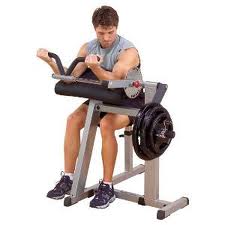
The differences affect our running and training. Think of road running as being like a weight machine in a Gym. Say the "curl" machine. You sit straight, you rest your upper arm on the support, grab the lever and do your reps "just so". The lever will only go in a nice smooth arc. The machine is designed to exercise just those muscles for which the machine is designed. Running on roads is a bit like that.

Trails are more like free weights. With free weights you get no help in posture or specificity. Your arms can move every which-a-way. The peripheral muscles that control lateral movement and balance are suddenly engaged, and you might even injure yourself if you're not careful. Running on trails is more like that. 

But the flip side is you'll develop stronger calf muscles from the effort of taking off from soft ground, stronger ankles and foot muscles and generally much better balance. And that's to say nothing of how much easier it is on your joints without the pounding your knees and ankles get from the roads. 

It's somewhat like comparing a good runner with a good basketball or volleyball player. You may be fitter on the roads than you college buddies, but if you join them for a pick-up game in the gym you will be very, very sore that night! Not so, if you're a trail runner. 

Now, the simple ABCs for getting started

  • A: Use the bridle path

    I've been running on the Bridle Path in Central Park as much as I possibly can for probably 25 years. Folks occasionally tell me "Oh, I can't run there — I have weak ankles". Balderdash! The whole point of running there is to strengthen your ankles and your overall balance. And they're so well trodden and flat (except after a downpour) that it would be hard to stumble or trip. (Secret: I have managed to stumble and even hit the ground hard once or twice in my 25 years of Bridle Path running. Don't tell anyone .)
    Of course the Bridle Path is hardly what you would call a trail, but it may be your first step off the roads, and it's right here in Central Park. Just watch out for all the horses. BTW: if you live in the outer boroughs, you'll find bridle paths in Forest Park, Queens, Prospect Park, Brooklyn, and Van Cortlandt Park in the Bronx (actually, no bridle paths there, but there's an old rail trail, and an even older aqueduct that will suffice).

  • B: Do cross country races

    Some of the best cross country races in the country take place in Van Cortlandt Park, a subway token (or a metrocard swipe) away. High schools and colleges have been taking their teams there since before you were born (even before I was born!). The NYRR has a series of 4 or 5 races every fall, but I think the best races are on warm summer Thursday evenings — the Van Cortlandt Track Club summer 5K series. Why? they are smaller with a more "small town" flavor, and instead of winning medals, you win carrot cakes. And besides, the people running them are really nice.
    I 've included a description of the series with some background information below as told to me by Fred Daly, the Race director.

  • C: Run and race on easy trails

    Cross country courses are not trails. They'r really just soft roads that are narrower, curvier, and steeper tha then your average roads. Trails, on the other hand, are trails. Narrow, sometimes rocky, very curvy, and occasionally very steep. I give some routes on local trails below that are good for beginners once you want to move beyond the bridle path and cross country.

    And lastly, I describe what I consider to be the best starter trail race around (in the words of Jill Staats, race director). The VCTC Urban Environmental Challenge 10K Trail Race. It's short, it's easy, it's easy to get to, and it's fun.
    Just do it!

The Local Scene

The local running club at Van Cortlandt Park puts on the summer cross country series, every other Thursday evening in the summer (the "B" of the ABCs), and the Urban Environmental Challenge (the "C"), a trail race in April. 
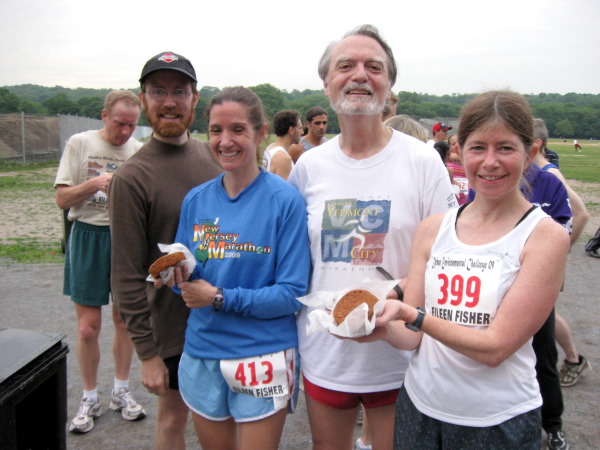
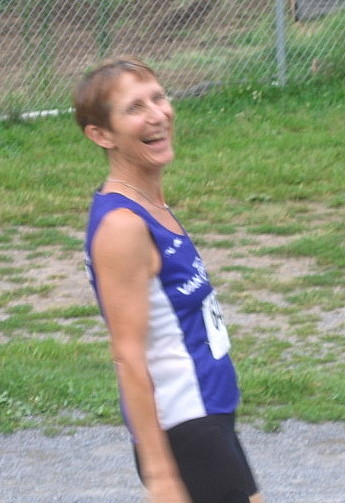
Susan S. takes home a carrot cake
These are possibly the best introduction to trail running, and they're just a subway ride away. You are not likely to see more that 150 runners in any of these. They’re all hand timed and scored. The carrot cake and carrot muffin are the prized awards, and it’s all a volunteer effort. This is the Real Deal!

I've run all of these over the last 5 or 6 years and I'm not looking back. 

A couple of years ago, I asked the race directors of these races (actually, 1 races and a race series) — whom I've gotten to know well — to give us a glimpse of the inside story of putting on these races. The Trail 10 K is coming up on April 13th and the cross country series starts in late May, so get training and some Thursday evening, come on up to the Bronx and enjoy your introduction to cross country — the "B" of the ABCs of trail running. Note: the directors of these races have changed since this report was originally written, but the fun hasn't changed a bit.  Enjoy!

The VCTC Summer 5K Cross Country Series
by Fred Daly, Race Director

Fred Daly,
Race Director
I think the first year for the x-c series was 1999, but it might have been 1998. It was the brainchild of Bob Velez, who since moved to Puerto Rico, though he still shows up once in a while for the race. I took over ten years ago or so. 

All those years, Otis Matthews and I teamed at the registration table, and Bill Smith handled everything else — water, course marshals, etc. I have always thought that Otis was the guiding spirit of the series — his calm, low-key manner embodied the atmosphere we wanted. I love the series because there's a kind of community feel to it. Somehow the muffins are a symbol of the ethos of the thing. They were Bob's idea. I think it's neat that we hand out muffins instead of medals or trophies, and that we charge only $5.00.

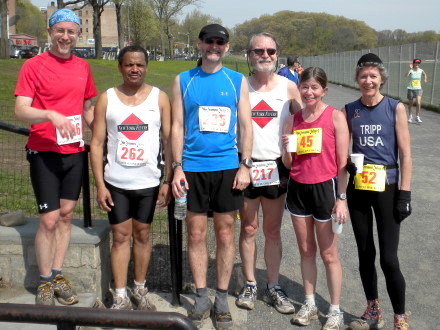
Some carrot muffin winners among the Flyers
A couple of times in the past folks in the club have wanted to make a bigger deal of the 5K series, and I've resisted. We don't need or want 400 runners, and we don't need it to be a cash cow for the club. Scoring by hand is a little stressful, especially on a wet or windy day, but I prefer it to spending tons of money on an electronic system.
In the first years we'd have maybe 40 runners at the start of the summer and build to about 80. For a long time, 100 was basically our max. In recent years it's gotten bigger; the first two this year were about 140, which makes me a little nervous because it might mean we'll have huge fields at the end. The most we ever had was about 210. 

What else is interesting? One of the best features has been the participation of younger runners, especially the Rabbits Club from East Harlem. They missed last year (transportation was not available), but we got them back for the first race this year.

Link for the 5K Cross Country Summer Series (this still has last year's schedule, but I expect they will update it soon): Cross Country Series  

The Best Starter Trail Race Around:
The VCTC Urban Environmental Challenge
by Jill Staats


Jill Staats

This 10K trail race, as with the summer cross country series, is an easy race to put on. We do not need permits as you do to run the roads nor police to help direct traffic. I start in October and decide on a date early in April and apply for a parks permit. In January I get the application together, post it on the website and get it printed so we can hand them out. I start to work on the “give away” in February. In the past we have done bags and this year we did a great T-shirt. By the end of March the bibs are done, ambulance ordered, portable potties ordered and we are ready for the race. Our club is fabulous when race day comes. People just show up and the work gets done, there is no need for any anxiety. You could not ask for a better group of people to team with. 

Over the years we have had different sponsors for this race. Last year it was the clothing company, Eileen Fisher and this year it was Capital One Bank. We either break even or make a little money on this race. The “give away” items are usually the biggest cost. Lloyd’s Carrot Cake has sponsored this race since the beginning. We get 16 small cakes and 21 muffins as our awards to the age group categories.
Flyers at the 2010 UEC
The first year I directed this race, it was the year of the nor’easter. I came close to canceling it, but because the high winds had died down, I decided to go on with it. I had 100 pre registered and 20 of those showed up. There were 40 people that came the day of the race and registered. I got the most emails that year from people telling me how much they loved the race. I think people that run this race almost like the weather to be bad. It was certainly challenging for a newbie race director. It didn’t stop me; I have done it now for 4 more years. I have loved doing it and my favorite part is the day of the race and everyone coming together to make it happen. That is the great part of being a member of the Van Cortlandt Track Club.
Link for the UEC 10K trail race: UEC Link  
  

Some Easy Trail Training Routes:
1) Old Putnam Line and Old Croton Aqueduct Loop

This loop (about 6 miles) goes through some of the parts of Van Cortlandt Park and Westchester that you will likely never see. Marshes, woods, old aqueduct structures built in the 1840s, and the lovely Tibbets Brook Park, not a destination for the average New York City runner. The route starts at the south end of VanCortlandt Park on Broadway, a couple of blocks north of the 242nd Street subway stop. 

A Note on the Slideshows: the slideshows come from Picasa Web Albums (a free service) and don't allow much control for embedded albums.  The rep. rate is 3 seconds and the show keeps looping around when you reach the end.  You can slow them down using the control at the bottom of the screen and just kill the window when it's looped around (unless you liked it so much you want to watch it again).

The Old Putnam Line in Van Cortlandt Park


  • Enter the park and head past the old mansion. Bathrooms are available at the nature center.
  • Continue across the south end of the field on the track. Enter the woods at the path where the track turns left.
  • Go down the path through the woods about 20 yards to the old Putnam Line — a straight dirt path which was formerly a rail line.
  • Go north on the path. After about 1.5 miles, you will enter Weschester County where the path is paved and is known as the South County Rail Trail.
  • Continue north to Tibbets Brook Park, a paved path to the right just after a bridge.
  • Go north on the park road to the bridge over the brook, just before the last lake.
  • Circle all the way around the lake (clockwise) and head up the hill to your left, on the path just after the bathroom at the southeast corner of the lake. This climbs several hundred yards to the Old Croton Aqueduct, a level straight dirt path. This is the original aqueduct from Croton to New York City completed in 1848.
  • Head south on the aqueduct about 3 miles. The Aqueduct will disappear and you will find yourself on a rough paved path. This will drop down to the right and follow the Mosholu Parkway south, for about 1/4 mile and then head up to the left.
  • The rough path will end at the north sidewalk of the Major Deegan. Turn right and cross the overpass where the Deegan crosses over the Mosholu.
  • At the west end of the overpass, the sidewalk will disappear and an old stairway will be on the right. The top of the stairway is fenced off. Go around and down to the golf pathway below.
  • Circle around to the left (don't go under the Deegan) and follow the golf pathway to the Golf House.
  • Cross the road and head straight west on the path through an underpass, and continue along the south end of VanCortlandt Park, arriving back at Broadway at your starting point.
It's much easier than it sounds — here's a map of the route: Old Putnam Line — OCA loop

2) Riverdale Park

This a a great little park in the Bronx, and is a largely undiscovered gem. It goes along the Hudson River from a little north of Spuyten Duyvil, up to the Riverdale Train station at 254th Street. It's rolling, but not really hilly, and is very scenic, with views across the Hudson seen through the trees. 

Link for Riverdale Park: Riverdale Park
 
Riverdale Park overlooking the Hudson


Here's a brief description:
The route starts at 225th Street and Broadway on the Bronx side of the Broadway bridge, underneath the 225th Street No. 1 subway stop, aka Marble Hill. You can walk the first part, on streets, but hey! why not run.
  • From the Bronx side of the Broadway Bridge, go left on 225th Street for 1 block.
  • Go right on Marble Hill Avenue and stay on it as it bends to the left, and then back to the right.
  • Go left on 230th Street and go all the way to Irvin Avenue.
  • Go left on Irvin, which becomes Johnson and go up the long hill.
  • On the way down the far side of the Johnson Avenue hill, approach the Henry Hudson Bridge far overhead.
  • Continue on Johnson, which becomes Palisade Avenue at the bridge.
  • Stay on Palisade down and to the right. After about 1/2 mile you will get to 232nd Street with Riverdale Park on the left.
The trail route starts at the south end of Riverdale Park, on Palisade Avenue and 232nd Street 

  • Enter Riverdale Park at the opening in the fence.
  • Stay on the main trail and head north. Eventually you'll get to a street with a few houses.
  • Go right up the hill to Palisade Avenue; go left and pass by the houses, then reenter the park at the opening in the fence.
  • After about a mile, the trail will come out onto Palisade Avenue and Spaulding Lane will head up to the right. Palisade Avenue will disappear here.
  • Get back on the trail and continue through the park to 254th Street, about another half mile.
  • From here you can go down the hill to the Riverdale Station and take the train home, or up the hill and right on Independence Avenue to Wave Hill.
  • Link to detailed route map: Map (Note: this map shows an expanded route with an extra loop down under the Henry Hudson Bridge and a side trip all the way to the College of Mount Saint Vincent and back.) 

2) The Palisades

Palisades Park has a trail anong the top of the cliff, which is actually part of the Long Path, a trail that goes from New York City north to Albany. The Palisades portion goes along the top all the way to the State line, nearly 12 miles. Another trail called the Shore Path follows along the river far below. At intervals along the route, there are trails or roads connecting the top to the bottom, so lots of nice loops are possible. You can run over the GWB or take the bus to Fort Lee. From there you can do an out-and-back, a loop, or do a one way run and take the bus back. The trail is steeper and rockier than the others I've mentioned, but it is absolutely great training for trail racing or running in general. 

Link for Palisades Park: Palisades Park
Link for Palisades Park Maps: Palisades Park Maps
Link for bus along 9W (which stops near points on the Palisades): Route 9W Bus


The slide show depicts a loop I ran with a friend last year. After crossing the GWB, we followed the Long Path (along the top) to just past the road to Greenbrook Sactuary (A wildlife sanctuary run by a non-profit). We then took the Huyler's Landing Trail (marked by red paint blazes) which takes you down to the shore, where you can head back to the GWB either on the road or on the Shore Path. It's about 15 miles total including about 3 miles on the bridge. 

The Palisades on the Long Path at the cliff top

Distances given are from the start of the path on the Jersey side and are approximate. Add about 1.5 miles (each way) for the bridge

  • Cross the GWB, turn right where the bikers hang out, go under the overpass and enter the park via a pedestrian overpass signed "Long Path".
  • Head north through easy woods and meadows passing around Allison Park and St. Peters College after about 1.5 miles.
  • Continue north on the left side of the fence at St. Peters College, soon crossing the park road down to the Englewood Boat Basin. Continue with ocasional forays onto the highway verge, to the Rockerfeller Lookout at about 3 miles.
  • Continue through more rugged tarrain, crossing the Greenbrook road at about 5 miles
  • Turn right on Huyler's Landing Trail (red blazes). Go down to the shore and head south either on the road or the Shore Path at about 6 miles.
  • Head south on the road (rolling hills) or path (rough and rocky), arriving at the Englewood Boat Basin (rest rooms, snack bar) at about 10 miles
  • Continue south on the shore path, which in this section is wide and flat, to Ross Dock at about 11 miles
  • Head south and take the park road about .5 miles to the start on the Carpenter Trail, Do not head up the exit road, stay on the road along the shore.
  • Climb the Carpenter Trail (370 stone steps) to the top, bear left and exit the park where you entered.
  • Total mileage about 12. Add 3 more for the bridge and back. See this detailed route map: Map. See also the Palisades Park maps linked above. 


Papa Bear


This post is adapted from a report on Papa Bear's web site: Beyond Central Park: Trail Running 101 , which in turn was adapted from an article in the April, 2011 NY Flyers Newsletter.

Read more...

  © Blogger templates The Professional Template by Ourblogtemplates.com 2008

Back to TOP