Monday, November 14, 2011

Dear to My Heart: NYC Marathon Takes on New Meaning with MTP

Coach Kari
(with Coach Todd in Background)
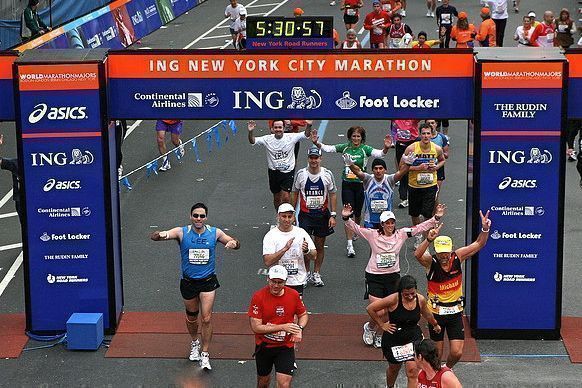
Up until this past Sunday, the 2005 NYC Marathon has always had the most meaning to me personally. It was the year I completed my first marathon and the day when my love for the sport of running began.  Okay, maybe not immediately after the race, but within a few hours. I remember looking at my mom as she began walking down the stairs into the subway post race as if she had just lost her mind and I remember sitting in the back of my car eating a full bag of cornbread from The Corner Bakery on the Upper East Side.

Of all the marathons I have run to date, I still have the most memories from NYC. I remember feeling like my world was over at the base of the Queensboro Bridge just to hear the roar of Manhattan once I finally made it over, screaming into my step-sister’s camera at mile 18 “I’M DYING” and faking my way through seeing my family at mile 23 just to begin my “I’ll walk/run at that tree” game through the park. I remember most the moment I finished and realized I had just found strength in myself I never knew existed.

Well, on Nov 6, 2011, it was the strength and sheer determination I witnessed in my friends and the NY Flyers Marahon Training Program (MTP) athletes that has made the 2011 NYC Marathon not only the most memorable but the most dear to my heart. This is the first year I cheered as a coach, which was distinctly unlike my experience any year before. Coach is a title I didn’t always know I wanted or deserved, but over the past 19 weeks in working with the amazing athletes of the NY Flyers MTP it has become a title I strive every day to live up to.

As I was leaving my apartment on race morning I had to stop for a moment to check the weather and make sure my favorite Flyer workout accessory wasn’t needed…my umbrella. It was then that I realized it was the PERFECT race day, it was the kind of day that PR’s get set – slightly cloudy with highs in the mid- to upper-50s. Wow, if anyone earned a perfect race day it was the NY Flyers MTP group who ran grueling speed workouts week after week in the rain.

So Many Rainy Runs for MTP that They Became a Blur
Coach Evelyn, Coach Todd and I decided to meet in Brooklyn and head over to mile 10 to watch the first wave of runners come through before trucking back into Manhattan and stationing ourselves at the corner where you enter 5th Avenue, just past mile 22. I saw a handful of MTP athletes at mile 10 – Bill H, Allison B, Coach Will, Mona S, plus more, and of course they all looked GREAT! At that point I think everyone was out too fast…blame it on the excitement and the weather since I knew it was not that they just weren’t following the race plan :)

Then on to Manhattan…. I have always said that mile 22 is where is the race begins as in it’s where it gets tough so I thought my very loud voice could be of good use at this point. The first Flyer I saw fly by was Bill H. I can’t miss his lean, tall build anywhere and he was working hard for that awesome 3:26 finish time. I got so excited in fact that I found myself with my hand over my mouth after screaming out for him to “#$%!ing fight for it!!” I had better stick to words like “great,” “strong” and plain ole “fight” to spare the children around me.

Bill H
Looking  #$%!ing  Strong!
Of course my $3.00 app had failed me and drained my phone so at this point my eyes were glued to the road awaiting who I thought would be the next runner. Dave S came next and looked strong, well on his way to finishing his first marathon in 3:21 – holy smokes! The next stream of runners were fast and furious and with each one I became more and more excited and emotional. Now I always say when the going gets tough in a race you should SMILE…easier said than done, but every Flyer I saw along the course did just that and it was so awesome to see. If you didn’t see me let’s just say I was intensely into this race, so much in fact I had a reporter ask me to do an interview about spectating the marathon and I looked at her and said “I’m watching for my athletes…no time!”

Another One of My Kids
-Bob C-
Complete with Smile :)
We all go into races with goals and expectations and when it all falls into place we end up just where we wanted to be and many of our Flyers did that just that. Sometimes the day isn’t perfect but we fight to the finish and that medal is our proof of our battle (well sometimes it’s our toes, feet, legs and other blistered/chafed areas). The marathon is a humbling distance and sometimes it wins and other days you win… it is just that challenge and uncertainty that seems to keep me coming back for more.

I was so proud watching so many of our MTP Flyers run the 2011 NYC Marathon, and it gives me great honor to be able to associate myself with this group. Congrats to all our runners…you guys are absolute ROCKSTARS in my book! Till next year…

- Kari S, NY Flyers MTP Coach, Coachkarismith@gmail.com

Read more...

Friday, November 11, 2011

My Marathon is Over, Now What? -- Keys to a Fantastic Off-Season

Chicago, Atlantic City, Marine Core, ING Hartford, Philadelphia, and the Granddaddy of them all, the ING New York City Marathon... Some of the more popular fall marathon events in the northeast.
If youʼve run and completed one of these races, congratulations! Having run seven marathons myself, and considering signing up for my eighth, I understand how much preparation goes into an event of this magnitude.
Some of you may you have trained all year for this marathon, or at the very least, the last four months.You shared your glory with your friends and family after the race....you walked around the next day or two with your marathon medal around your neck...you spent the next
two or three weeks talking about how you could have run faster if you had only.........But after about three weeks of that, itʼs time to move on.. NOW WHAT?


Recovery And Regeneration

Some of you will rest and recover, while others will sign up for another marathon, tri-athalon, or similar endurance event before the sweat dries. While setting a new goal for yourself is commendable, continually exposing your body to stresses of endurance training without the proper amount of recovery, may simply result in being disappointed with your performance results and bringing your body one step closer to orthopedic injury.

Running marathons is very stressful on the human body. Undoubtedly, it involves a deeper level of muscle and joint tissue healing and a more complete resetting of the endocrine and immune systems than that which occurs during your normal race and training cycle. Aside from just putting a strain on all of the muscles in your legs, arms and torso, marathons can also affect your lungs and many of your other internal organs.

An Austrian study found that blood levels of antioxidant enzymes remained significantly reduced, while biomarkers of muscle damage and inflammation remained significantly elevated, in triathletes nearly three weeks after they had crossed an Ironman finish line. I would imagine that such abnormalities could be found in runners for at least a couple of weeks after they complete a high-workload training cycle culminating in a peak event such as a marathon. Because of this, it's important that you take some time off from running after completing a marathon. Marathon runners and marathon coaches often suggested different time frames that you should use when resting after a marathon before running again or running another marathon. The most common recommendation for resting after a marathon and running again is 2 to 4 weeks, before running another marathon, 16 to 20 weeks.

Bill Rodgers
Professional Advice

On April 13, 2008, Ryan Hall finished 5th in the London Marathon with a time of 2:06:17-the fastest marathon time ever recorded by an American- born runner. Just 14 weeks later Hall ran the Beijing Olympic Marathon, finishing a disappointing 10th.Top-10 in the Olympic Marathon is nothing to be ashamed of, but Hall knew he could have done better.

After the Games, Hall confessed that his pre-Olympic training had gone poorly. He just couldn’t match the times he was accustomed to posting in key workouts, and the more he fell short the more he tried to force his training, and the more he forced it the worse he felt. In the immediate aftermath of Beijing, Hall wasn’t sure exactly why he had not been his usual self in the summer of 2008, but eventually he figured it out. “Looking back on it,” he said in a recent interview on runnersworld.com, “I think I never let my body totally recover from London so I never made the physical gains that I needed to.”

Many years ago, when asked how long one should wait after running a marathon before running another one, the great Bill Rodgers said, “Until you’ve forgotten it.” Ryan Hall probably defied this wisdom!


Training Cycles

For many runners, training cycles are year round. No change from month to month, season to season. But proper training for sport involve training cycles, with intense strength training and conditioning programs that lead into the seasonʼs schedule or event training program.

A runner can no more expect to train progressively year-round than a cornfield can expect to produce corn spring, summer, fall and winter. The body needs time to heal. Most professional and high-level competitive runners rest two to four weeks after completing a training cycle. The average should not be doing trying to emulate the professional runners training cycle.. A high-level runner has a team looking after them; a coach, trainer, massage therapist, physiotherapist, nutritionist, etc. They run, eat and sleep.. That’s it! The average runner is trying to cram in their miles within the confines of their forty to sixty hour workweek along with everyday responsibilities without the benefit of a team.


Create an Off-Season

With fall marathon season ending in November and with two to four weeks rest post race, the winter holiday season right on it’s heels....an ideal off- season for a runner should begin in January of the new year. The off- season allows the runner to: rest and recover from months of intense training, recovery from injury, and implement an off-season strength training and running training strategy. The off-season lasts 16 weeks. The same amount of time it takes to prepare for a marathon. This is the time it takes to establish a fitness foundation that will stand up to the demands of being an endurance athlete and allow the athlete to reduce the rate and risk of overuse injuries that plague endurance athletes as well as lead to improved performance.

Rather than using the spring race schedule to “get in shape”, runners should “be in shape” and simply use races to sharpen their times.
Getting Started 

Letʼs break it down...We have 4 phases-each phase is a 4 week program periodized progressively and subdivided by workout days... then we start programming exercises. For those of you who followed a marathon training program.... the same principles apply. 
Phase 1 (Intro phase-establish joint mobility, muscle flexibility, static and dynamic stability, improve posture.)
Phase 2 (Base conditioning phase-master movement patterns with specific exercises that emphasize your weaknesses.)
Phase 3 (Strength training phase-introduce load to movement patterns to improve neuromuscular recruitment.)
Phase 4 (Shock phase-add plyometric training to improve muscle elasticity and tissue tolerance.)

This cyclical approach to training that is progressive in nature results in peak levels of performance. But, before we begin our four phase conditioning program we must identify your weaknesses in order to make them stronger.

Know Before You Go

I have read many running related articles that discuss how to avoid common running related injuries. Few ever mention getting screened or assessed to see what your injury risk potential is! An assessment goes a long way in preventing training injuries in that it identifies the weak link in the athlete and allows the coach/trainer to target that weak link prior to the beginning of the training season.

Assessing injury risk is the first step to reducing that risk!! Itʼs far easier to prevent an injury than to treat an injury. The best way to prevent injury is by taking a pro-active approach. Injuries arise in runners because most simply try to add fitness or performance to a body out of balance or a body that is already injured and experiencing pain.

Strength Training for Runners

As runners STRENGTH TRAINING is something I think most runners feel that they “should” be doing, but as runners and endurance athletes we donʼt really know how to incorporated it into our training to make it beneficial to us. Thatʼs where the introduction of an off-season comes in.

Clara Grandt

The benefits of strength training are numerous, strength training: increases strength of connective tissue (muscles, tendons, ligaments), increases bone density, improves resistance to muscular fatigue, maintains lean mass that gets catabolized in racing season, increases muscle POWER, improves running economy, reduces the rate and risk of training related injuries.

“Before each training cycle, I add one thing to focus on that will benefit my running, like doing strength training. This helps me to improve without risking injury by making drastic changes”. --Clara Grandt - 2011 Boston Marathon in 2:29:52 at age 24!

Strength training will help you: increase speed, resist fatigue, prevent injury, and maximize your athletic potential!

Why Runners Avoid Strength Training

So, with all these obvious benefits, why arenʼt more runners incorporating strength training into their programs? A recent on-line survey of runners revealed the following statistics.

What Strength Training do You do Regularly?
  • Upper Body      27%
  • Core and Legs   9%
  • Entire Body      27% 
  • None                36%
There is a lot of controversy over the type of strength training an endurance athlete should be doing, when you do it, or whether they should be doing it at all. One reason runners avoid strength training is that they still figure that the way to get into better running shape is through more running. Although this seems logical, itʼs the very reason most road runners end up injured and rarely reach their running potential. Another reason runners avoid strength training is not enough time to do it. Itʼs hard enough to try to get in all the running you need to do, how can you fit in strength training into the mix? We tend to think of our training in terms of how many miles we can pack into our busy week, but yet doing the same thing season after season, and expecting different results is by definition, insanity! Lastly, lack of knowledge..they just donʼt know how.


Brett’s Bottom Line:

“Running pain and running injuries are not an inevitable part of training.” If you plan your off-season as well as you planned your racing season allowing your mind and body sufficient rest and recovery, get screened and implement a functional strength training program-endurance runners can improve their bodies and run injury free, spending more time on the roads and less time in rehab.

Brett Cohen is a Sports Performance Coach, Nutrition and Lifestyle Coach, Educator and Runner as well as creator of: “Ready to Run”, a comprehensive conditioning program specifically designed for runners and endurance athletes.
imakeufit@gmail.com
www.integratedtrainingsystems.com

Read more...

Monday, November 7, 2011

Fright Fest: Read About it if You Dare (MWAHAHAHAHAHAHAHA!)


Sondra M
The Flyer Fright Fest fun started at 7pm on Friday night of Halloween weekend when a group of Flyers channeled their inner ghouls and goblins at NYC’s scariest haunted house, Blood Manor. One by one, the Flyers and “friends of Flyers” arrived to find a crowd of thrill seekers lined up for several blocks. Flyers Stephanie P and Sondra M, along with Sondra’s husband, dressed in their Bavarian gear recently purchased during their Germany travels for the Berlin Marathon. Flyer Claudia O chose a colorful and fun clown costume after a bit of “encouragement” to dress up.

Scary Flyers
Flyers Alan G and Heather M arrived just in time after fighting tunnel traffic. Alan G was barely recognizable with multiple tattoos and a hat. He claimed to be vampire, but without large incisors, he took on more of a Freddy Krueger look.

Alan G
Heather M was prepared to keep us all safe in her police outfit complete with a billy club and handcuffs. Flyer Elizel A also joined in the fun along with a few friends of Flyers. While in line, characters dressed in various costumes pleased the crowd with sudden spooks raising the level of excitement for the scare that awaited us inside. Despite its length, the line moved quickly and we were ready to enter in no time. Once inside, the fun began as we meandered through a series of well staged rooms and hallways. Every room took on a different horror scene, decked out from floor to ceiling with props, paint, and actors preparing to spook you. Personal favorites included a long maze in the pitch black, the Nightmare on Elm Street room, and the 3-D glasses and scenes. Laughs and screams ensued during the 15-20 minute tour through the haunted house. Once out, all decried the great fun of the experience, one most hadn’t had in decades.

Anyone Know Where's the Bridle Path?
I'm Ready for a Run!
Next up were drinks at M1-5. Trusting Alan’s sense of direction and Stephanie’s superior logistic skills (i.e. map) we meandered through southern Manhattan where after a few missteps, we finally arrived! Happy hour pricing, a large RSVP section, and more friends of Flyers welcomed us, what a delight. In preparation for a Halloween party the following night, M1-5 was even decked out in full Halloween décor and cheer. We spent the remainder of the night munching on appetizers, drinking cheap cocktails, watching game 7 of the World Series, and discussing the fall marathon season. As the bar filled, more and more people arrived in costume enhancing the Halloween spirit. For those willing to forego their Saturday long run (replaced with a Sunday run of course), there was even a visit by a very famous rock band bassist.

Mark your calendars now as discussions of a Flyer trip to Sleepy Hallow for next year’s haunted house are in progress.

-Sondra M

Read more...
Thursday, November 3, 2011

Inspiration for Runners: Notable Quotables

Dave K
With the NYC Marathon, Philly Marathon, other marathons, and cold winter running ahead, here are some quotes that may inspire.  

If you have your own favorite quote, please share it in the comments section below (if you don't have a Google account, just sign in as annonymous)

"You have to wonder at times what you're doing out there. Over the years, I've given myself a thousand reasons to keep running, but it always comes back to where it started. It comes down to self-satisfaction and a sense of achievement." 
- Steve Prefontaine

"I always loved running...it was something you could do by yourself, and under your own power. You could go in any direction, fast or slow as you wanted, fighting the wind if you felt like it, seeking out new sights just on the strength of your feet and the courage of your lungs." 
-Jesse Owens

Jesse Owens

"The will to win means nothing without the will to prepare." 
-Juma Ikangaa, 1989 NYC Marathon winner

Juma Ikangaa
"In running, it doesn't matter whether you come in first, in the middle of the pack, or last. You can say, 'I have finished.' There is a lot of satisfaction in that." 
-Fred Lebow, New York City Marathon Co-Founder
Fred Lebow
"Running is the greatest metaphor for life, because you get out of it what you put into it." 
-Oprah Winfrey

Oprah
"Racing teaches us to challenge ourselves. It teaches us to push beyond where we thought we could go. It helps us to find out what we are made of. This is what we do. This is what it's all about." 
-PattiSue Plumer, U.S. Olympian 


PattiSue Plumer
"Believe that you can run farther or faster. Believe that you're young enough, old enough, strong enough, and so on to accomplish everything you want to do. Don't let worn-out beliefs stop you from moving beyond yourself." 
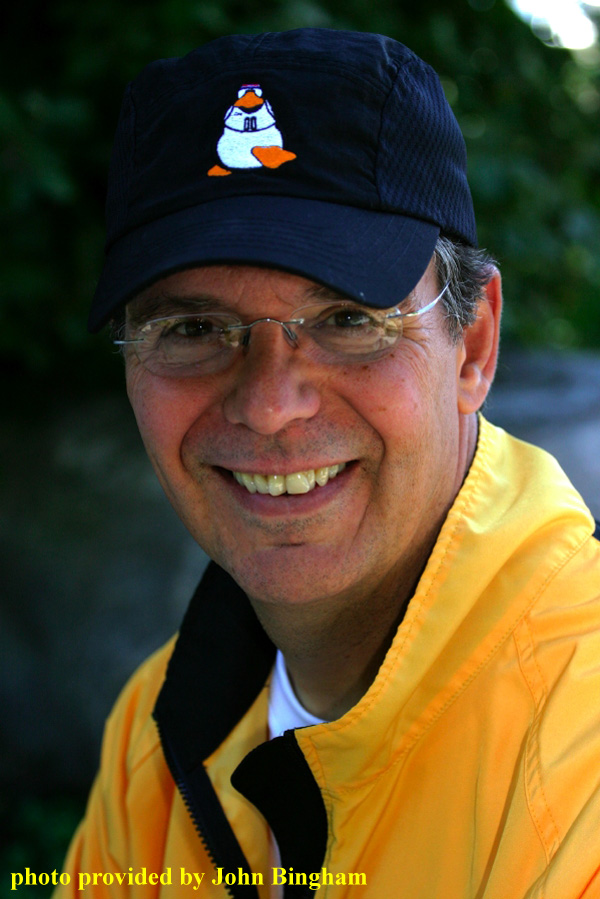
-John Bingham, Running Speaker and Writer

John "The Penguin" Bingham
"Running is a big question mark that's there each and every day. It asks you, 'Are you going to be a wimp or are you going to be strong today?'" 
- Peter Maher, Canadian marathon runner
Peter Maher
"Ask yourself: 'Can I give more?'. The answer is usually: 'Yes'." 
-Paul Tergat, Kenyan professional marathoner

Paul Tergat
"We run, not because we think it is doing us good, but because we enjoy it and cannot help ourselves...The more restricted our society and work become, the more necessary it will be to find some outlet for this craving for freedom. No one can say, 'You must not run faster than this, or jump higher than that.' The human spirit is indomitable." 
-Sir Roger Bannister, first runner to run a sub-4 minute mile.

Roger Bannister
Got an inspirational quote? Put it in the comments section below, please.
-Dave K

Read more...

  © Blogger templates The Professional Template by Ourblogtemplates.com 2008

Back to TOP